
Table of Contents
- Why Leather Gun Belt Care Instructions Matter for Daily Carry
- How to Clean a Leather Gun Belt: Step-by-Step
- Leather Belt Conditioner for Gun Belts: Choosing and Applying
- Preventing Leather Belt Sag: Stiffness, Fit, and Load Support
- Hardware Maintenance and Inspection: Buckles, Screws, and Fasteners
- Proper Storage and Environmental Protection for Leather Gun Belts
- Common Mistakes and Cleaning Agents to Avoid
- Conclusion: Build a Simple Maintenance Schedule
- Frequently Asked Questions
Last Updated: October 7, 2026
Why Leather Gun Belt Care Instructions Matter for Daily Carry
A leather gun belt is a load-bearing tool, not a fashion accessory. Sweat, weight, and friction wear it down fast.

That stiffness is the point. Once a belt softens, the holster sags and shifts, slowing your draw and printing worse.
The good news: leather responds well to simple, regular care, the right products, a soft brush, and about ten minutes a month.
How to Clean a Leather Gun Belt: Step-by-Step
Cleaning a leather gun belt takes about ten minutes and four supplies: a soft brush, pH-balanced gentle soap, a microfiber cloth, and clean water. Work on a flat surface and never soak the leather.
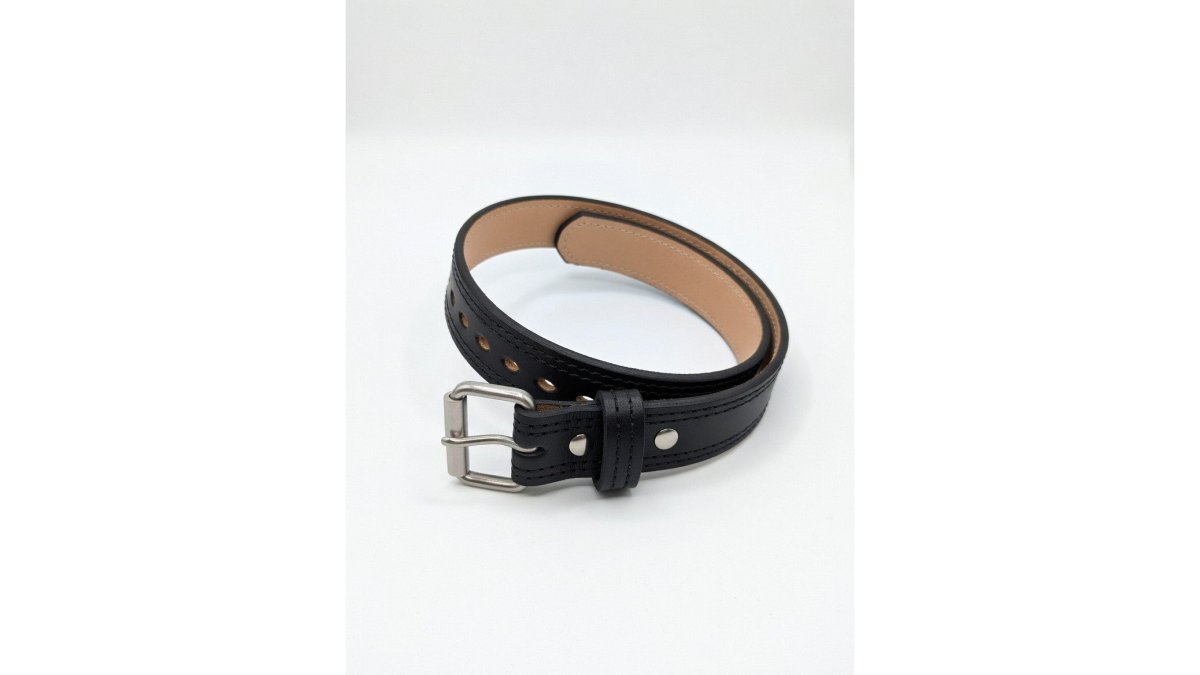
Here is the full process:
- Wipe the belt with a dry cloth to lift loose dust.
- Mix a few drops of gentle soap into a bowl of water.
- Dip the soft brush, shake off the excess, and scrub in small circles.
- Wipe away lather with a barely damp cloth.
- Let the belt air dry flat, away from heat and direct sunlight.
- Condition once the leather feels dry to the touch.
Removing Sweat, Salt, and Embedded Debris
Sweat is the number one enemy of a carry belt.
For embedded debris, use a soft brush rather than a rag. Grit works into the grain and stitch lines; a cloth pushes it deeper, while a soft brush lifts it out without scratching.
If you carry inside the waistband, clean the inside face too, it touches your skin and collects the most salt.
Gentle Soap, Soft Brush, and Air Dry Basics
Use a pH-balanced leather soap or mild saddle soap. Dish soap and laundry detergent strip the oils that keep leather supple.
Keep water minimal. A damp brush, not a wet belt, is the goal, soaked leather dries stiff and brittle.
Air dry is not optional. Heat is what kills leather. According to leather care guidance from the American Leather Chemists Association, direct heat sources dry leather unevenly and cause it to stiffen and crack.
Leather Belt Conditioner for Gun Belts: Choosing and Applying
A leather belt conditioner for gun belts replaces the oils that cleaning and daily wear remove. Apply a thin coat with a cloth, let it soak 15 to 20 minutes, then buff off the excess.
Conditioning keeps leather supple. Without it, the grain dries, the finish dulls, and cracks form near the buckle and holster slot.
A simple routine works best:
- Clean first, always. Conditioner traps dirt if you skip this step.
- Apply a small amount to a cloth, not directly to the belt.
- Work it in with light pressure in small circles.
Oil vs. Wax: What Works for Full-Grain Leather
Oils soak in and restore flexibility; waxes sit on the surface and add a light water barrier. Full-grain leather benefits from both.
For a gun belt, oil is the priority.
A common mistake is over-conditioning. A thin coat every few months beats a heavy coat every week.
If your belt has a vegetable-tanned finish, expect it to darken slightly over time.
Preventing Leather Belt Sag: Stiffness, Fit, and Load Support
Preventing leather belt sag comes down to three things: the right leather, thickness, and fit.
Sag happens when leather loses stiffness and rolls under the holster's weight.
Our Gun Belt is built to prevent exactly this.
The 1.5" width is the workhorse for most full-size and compact pistols. The 1.25" width is a lower-profile option for tight belt loops.
Measuring for Correct Belt Fit
Measure a belt that already fits, or measure around your waist with your holster in place if you carry inside the waistband. Do not send your pant size.
A gun belt one inch off is a bad belt. Too long, and the tail flaps and buckle sits off-center; too short, and you run out of adjustment holes.
Here is how to get it right:
- Lay a belt you already wear flat and measure from the fold at the buckle to the hole you use most.
- If you carry inside the waistband, measure with the holster on your body.
- Match that number to the sizing instructions, not your jeans size.
Hardware Maintenance and Inspection: Buckles, Screws, and Fasteners
Hardware is the most overlooked part of leather gun belt care, and it fails first. Check the buckle, screws, and stitching monthly.
Most belt failures are hardware failures, not leather failures. A loose screw or worn stitch can drop a buckle at the worst moment, and metal parts sit in a constant bath of sweat and salt that corrodes them.
Run this quick inspection monthly:
- Check that the buckle sits tight with no wobble
- Tighten any Chicago screws by hand
- Look for frayed or broken stitching near the buckle fold
Thread-Locking Compound on Belt Screws
Chicago screws, the two-piece fasteners on most quality gun belts, are removable so you can swap buckles or change orientation.
A small amount of thread-locking compound on the threads solves this. The most common product is Loctite, sold in several strengths:
- Loctite Blue (243 or 242): Removable with hand tools. This is the right choice for belt screws. It holds under vibration but lets you disassemble the belt later with a screwdriver.
- Loctite Red (271 or 262): High-strength, requires heat to break the bond. Do not use this on a leather belt, you will not be able to remove the screw without damaging the leather around it.
- Loctite Green (290): Wicking grade, designed to seep into pre-assembled fasteners. Useful if a screw is already installed and slightly loose, but harder to control on leather.
Apply one small drop to the male screw threads, not the female side or the leather. More compound squeezes out, cures on the surface, and collects grit.
If a screw keeps loosening even with compound, the threads may be worn.
Buckle and Metal Corrosion
Sweat is mildly acidic and carries salt. On brass and nickel-plated buckles it shows as a dull film or greenish tint; on bare steel, as rust spots. Wipe the buckle and exposed metal dry after heavy sweat, and once a month use a lightly damp cloth followed by a dry one. Do not use metal polish on an attached buckle, the residue stains the grain.
Stitching and Hole Wear
Stitching near the buckle fold takes the most stress because that is where the belt bends every time you put it on. Look for frayed thread, pulled stitches, or gaps between layers.
Belt holes stretch over time, especially the one you use most, letting the belt shift under load. Rotating between two adjacent holes spreads the wear.
Proper Storage and Environmental Protection for Leather Gun Belts
Store a leather gun belt flat or rolled loosely, in a cool, dry place away from direct sunlight and humidity swings. Hang it by the buckle only if the buckle can carry the weight.
Heat and moisture age leather fastest. A hot car can dry a belt out in an afternoon, and a damp closet invites mold.
Sweat and Salt: The Storage Problem That Starts on Your Waist
A carry belt is worn against the body, often under a shirt, 12 to 16 hours a day, absorbing sweat continuously.
Salt does two things to leather. It is hygroscopic, pulling moisture from the air and holding it against the grain, accelerating hydrolysis of the collagen fibers.
You can see this as a pale, chalky film. If you carry inside the waistband, the inside face shows it first.
The fix is simple, but it has to happen before storage, not after:
- When you take the belt off, wipe both faces with a dry microfiber cloth to lift surface sweat and salt.
- Let it air dry flat and fully before it goes near a closet, even slightly damp leather grows mold in humidity.
- Once a month in summer, or any time you see the chalky film, clean with a pH-balanced leather soap and a soft brush, then condition after it dries.
- Never store a sweaty belt in a gym bag, hot car, or sealed plastic bin. All three trap moisture against the leather.
Temperature, Humidity, and Light
Leather is hygroscopic: it reaches equilibrium with the air around it. Very dry air pulls out moisture and stiffens it; very humid air adds moisture and can grow mold.
Direct sunlight is a separate problem. UV light breaks down the finish and fades the dye, and the heat dries leather unevenly. A belt left on a car dashboard in summer can go from supple to stiff in one afternoon.
For storage:
- Keep the belt out of direct sunlight, which fades the finish.
- Avoid damp basements and humid garages.
- Do not store it coiled tight, which sets creases that become cracks.
What to Do After Rain or Full Saturation
If your belt gets soaked in rain, blot it dry with a towel, then air dry it flat. Do not wring it, hang it by the buckle while wet (the weight can stretch it), or apply heat. Once fully dry, which can take 24 hours or more, condition it. A soaked belt loses more oils than a sweaty one because the water carries them out as it evaporates.
Long-Term Storage
If the belt will sit unused for more than a month, a spare rig, a seasonal rotation, clean and condition it first, then store it flat or rolled loosely in a breathable cotton bag or pillowcase. Avoid cardboard boxes, which can be acidic and off-gas. Check every few months for mold or dryness, and re-condition if the leather feels stiff.
Common Mistakes and Cleaning Agents to Avoid
The fastest way to ruin a leather gun belt is to treat it like fabric. Most damage comes from a few avoidable mistakes.
Avoid these:
- Dish soap and laundry detergent, which strip natural oils
- Alcohol, acetone, and solvent-based cleaners, which dry the grain
- Saddle soap used too often, which can leave residue
A common mistake is using a leather cleaner meant for car seats or furniture. Those products are built for coated leather, not the full-grain leather in a carry belt, and can leave a film that clogs the grain.
Stick to a pH-balanced leather soap and a dedicated conditioner. That is the whole kit.
Conclusion: Build a Simple Maintenance Schedule
Caring for a leather gun belt is a ten-minute habit, not a project.
A belt that gets this routine stays stiff, holds your holster in place, and lasts for years.
At Armour Belts, we handcraft each belt in Michigan from full-grain leather, cut to your measurement, with a lifetime warranty on materials and workmanship.
Get started with Armour Belts and carry with a belt built to hold its shape for the long haul.
Frequently Asked Questions
How often should you condition a leather gun belt?
Condition your leather gun belt every 2 to 3 months with a dedicated leather belt conditioner for gun belts. If you carry daily in hot or humid conditions, or if the belt gets soaked with sweat, condition it every 4 to 6 weeks. Look for dryness, stiffness, or light cracking as signs it needs conditioning sooner. Over-conditioning can make the leather too soft, so stick to a schedule based on how the belt feels and how often you wear it.
Can you use saddle soap on a gun belt?
Saddle soap is a safe choice for cleaning a leather gun belt because it is pH-balanced and lifts embedded debris without stripping the surface finish. Use a damp, not wet, soft brush or cloth, work up a light lather, and wipe it away with a clean cloth. Avoid soaking the leather. After cleaning, let the belt air dry away from direct sunlight and heat, then apply a thin layer of leather conditioner to restore moisture and keep the leather supple.
How do you prevent a leather gun belt from sagging?
Preventing leather belt sag starts with fit and stiffness. Measure for your belt with the holster in place if you carry inside the waistband, and never order by pant size. A full-grain leather gun belt around 5/16 inch thick, like the Armour Belts Gun Belt, holds its shape under a holstered pistol. Keep the leather conditioned but not oversaturated, store the belt flat or rolled loosely, and avoid hanging heavy gear from a single point for long periods.
What is the best way to clean sweat off a leather gun belt?
Sweat contains salt that dries out leather and speeds up cracking. Wipe the belt with a damp cloth and a small amount of gentle soap as soon as you notice heavy sweat buildup. Use a soft brush on the grain to lift salt and embedded debris from the leather pores. Let the belt air dry completely at room temperature, away from direct sunlight and heat sources, then apply a leather belt conditioner for gun belts to replace lost oils and keep the leather supple.
Share:
Comfortable Gun Belt for Big Guys: How to Choose
Full Grain vs Bonded Leather Belts: What Lasts