
Table of Contents
- Why Standard Gun Belts Fail Bigger Frames
- How to Measure Belt Size Accurately for a Gun Belt
- Choosing a Big and Tall Gun Belt: Width, Stiffness, and Support
- What Makes a Comfortable Concealed Carry Belt for Larger Bodies
- Concealed Carry Tips for Big Guys: Avoiding Sag, Shift, and Buckle Pressure
- Testing Comfort and Support Under Real Carry Conditions
- Leather vs. Nylon and Long-Term Care for a Comfortable Gun Belt
- Frequently Asked Questions
Last Updated: October 5, 2026
Why Standard Gun Belts Fail Bigger Frames
A comfortable gun belt for big guys solves a problem most belt makers ignore: mass.
Belt support depends on how evenly load spreads across your waist and hips.
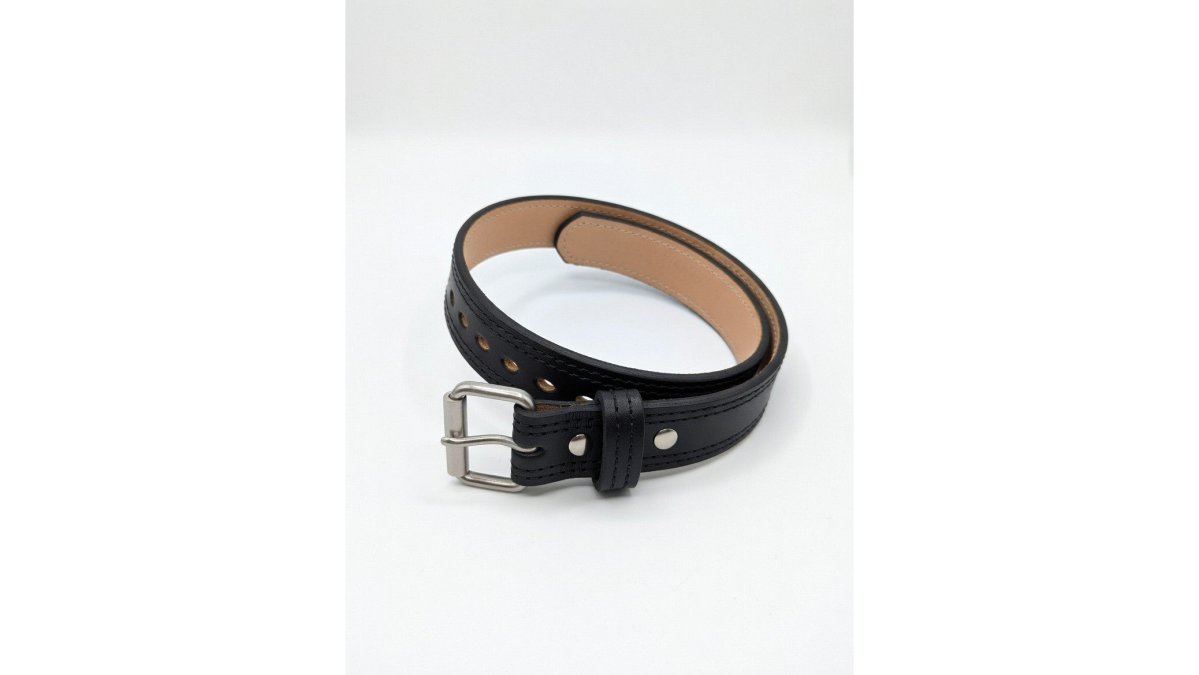
At Armour Belts, we build every belt from full-grain leather at roughly 5/16 inch thick, cut to the measurement you send rather than your pant size.

This guide covers how to size a gun belt for a larger waist, what stiffness does for concealed carry, and how to test a belt before you rely on it.
How to Measure Belt Size Accurately for a Gun Belt
Most sizing advice assumes an average waist. For bigger frames, the measurement itself is the hard part, and where most returns start. Capture the circumference the belt will occupy when loaded, not your jeans tag.
Why pant size and waist size both fail
Pant size describes your body at the narrowest point the manufacturer chose; belt size describes the path through the loops, over the holster, and across your waistband. On a larger torso those numbers can diverge by two to four inches, more with a holster and spare magazine. Order pant size and the belt pinches at the buckle or rides low.
The over-clothing measurement method
Use this method if you carry inside the waistband or wear layers.
- Put on the pants you carry in most often, including the belt loops you actually use.
- Holster up exactly as you would for a normal day, with the firearm and any spare magazine pouch in place.
- If you carry inside the waistband, wear the holster inside the waistband for this measurement, not outside.
- Run a flexible tape measure through the belt loops, over the holster, and around your waist at the height the belt will sit.
- Keep the tape snug but not compressed. Let it follow the same path the belt will follow.
- Note the number where the tape meets itself. That is your belt measurement.
The existing-belt method
If you own a belt that fits well, lay it flat and measure from the fold at the buckle end to the hole you use most. That number is your belt size. It is faster, but fails when the old belt was the wrong size to begin with, common for bigger guys who sized off pant size for years.
Extended waist sizes: what changes above a 44
Above roughly a 44-inch waist, three things shift.
- The measurement path curves more. Tape tension matters more around a larger midsection. Measure twice and average.
- The belt has more material to support. A longer belt carries more of its own weight, so stiffness matters more as waist size increases. A belt that feels fine at 36 inches can feel floppy at 52.
- The holes spread farther apart. Hole spacing is fixed, so a larger waist has fewer usable adjustment points relative to its circumference, the strongest argument for a swappable buckle.
Common sizing mistakes that cause returns
- Ordering pant size. The most common error, producing a belt that is too short, pinching at the buckle and riding low.
- Measuring without the holster. The holster adds bulk a waist-only measurement misses, on a bigger frame, an inch or more.
- Measuring over a thin shirt when you carry over a thicker one. Layers change the number. Measure in the clothing you actually carry in.
Measure once with the existing-belt method, once with the over-clothing method, and compare. If they agree, you have your size. If they disagree by more than an inch, trust the over-clothing number, that is the condition the belt will actually live in.
Choosing a Big and Tall Gun Belt: Width, Stiffness, and Support
A big and tall gun belt needs three things: width to spread the load, stiffness to resist rolling, and adjustability to fit a body that changes shape when you sit.

Width first. The 1.5-inch width is the workhorse for most full-size and compact pistols.
Stiffness second. A gun belt starts stiff on purpose, that rigidity keeps a holster from rolling outward and a full-size handgun from dragging the belt down on one side.
Adjustability third. A buckle held on with Chicago screws lets you fine-tune fit without punching new holes.
| Priority | What to Look For | Why It Matters for Bigger Frames |
|---|---|---|
| Width | 1.5 in for most carry setups | Spreads firearm weight over more area |
| Stiffness | Full-grain leather, about 5/16 in thick | Stops the holster from rolling or sagging |
| Adjustability | Ratchet or swappable buckle | Fine-tunes fit as your body shifts |
| Cut | Made to your measurement | Prevents pinch and ride-down |
What Makes a Comfortable Concealed Carry Belt for Larger Bodies
A comfortable concealed carry belt for larger bodies distributes pressure instead of concentrating it. Two design details do most of that work: buckle placement and thickness.
Buckle placement is the detail most guides skip. On a bigger torso, a bulky buckle digs into your stomach when you sit, especially in a car.
Thickness cuts both ways: heavier leather carries weight better but takes longer to break in.
Concealed Carry Tips for Big Guys: Avoiding Sag, Shift, and Buckle Pressure
Concealed carry tips for big guys come down to three failures: sagging, shifting, and buckle pressure.
Sagging happens when the belt cannot hold the firearm's weight on one side.
Shifting happens when the belt slides through your loops as you move.
Buckle pressure is the one bigger guys feel most.
A common mistake is buying a tactical belt sized like a fashion belt.
Testing Comfort and Support Under Real Carry Conditions
Test a new gun belt over a full day before you trust it, not in the first ten minutes. Comfort problems show up when you sit, drive, and stand repeatedly.
Run this sequence:
- Wear the belt holstered for a full workday.
- Sit in a car for at least 30 minutes and note any buckle pressure.
- Draw and reholster ten times, checking for shift.
- Walk a flight of stairs and confirm the holster stays put.
If the belt passes all five, it is doing its job. If it fails the car test, the buckle is the likely culprit; if it fails the sag test, you need more stiffness or width.
Leather vs. Nylon and Long-Term Care for a Comfortable Gun Belt
Material choice is not just style. It determines how the belt behaves after a year of daily carry, and for bigger frames, long-term behavior matters more than first-week feel.
How the two materials actually differ
Full-grain leather is a single piece of hide whose grain structure resists stretching, which is why a well-made leather gun belt holds its shape over years rather than months. Nylon webbing is woven, lighter, more breathable, faster to dry, but more prone to softening at the fold points.
| Factor | Full-Grain Leather | Nylon Webbing |
|---|---|---|
| Initial stiffness | High, with a break-in period | Moderate to high depending on layers |
| Weight | Heavier | Lighter |
| Breathability | Lower | Higher |
| Drying time | Slow, needs air drying | Fast |
| Appearance under a shirt | Reads as a normal dress belt | Reads as tactical or casual |
| Long-term shape retention | Strong if cared for | Depends on weave and stiffener |
| Best use | Daily concealed carry | Range, competition, hot climates |
What wears out first on a bigger frame
On a larger waist, the belt has more material to support and more surface area pressing against the body. Three wear points show up first.
- The fold at the buckle. Where the belt bends most sharply. On leather, surface cracking appears here first if the belt dries out; on nylon, the weave softens.
- The most-used hole or ratchet track. Repeated stress at one point is normal. A ratchet system spreads that stress across a track rather than one hole, which is one reason ratchet belts hold their shape longer on extended sizes.
- The back of the belt where it presses against a chair. Repeated compression against the seat back breaks down stiffness over time. Most reviews never mention this wear point.
Care that actually extends belt life
Leather care is simple but specific.
- Wipe with a dry cloth after heavy use to remove grit, which acts like sandpaper inside the fold.
- Condition sparingly, once or twice a year at most. Over-conditioning softens the leather and kills the stiffness you paid for.
- If it gets wet, air dry it away from direct heat.
- Avoid heat sources like car dashboards and dryers, which accelerate cracking at the fold.
Nylon care is simpler: rinse with water, air dry, and check the stiffener or webbing for softening at the fold points every few months.
When to replace a gun belt
A gun belt is a wear item, not a lifetime purchase. Replace it when any of these appear:
- The belt folds or rolls at the holster position under load, even after adjustment.
- The leather cracks at the buckle fold or the stitching pulls away.
- The belt has stretched enough that you are using the last hole or the end of the ratchet track.
- The holster shifts during a normal day of walking and sitting, which usually means lost stiffness rather than fit.
Frequently Asked Questions
What is the most comfortable gun belt for big guys?
A comfortable gun belt for big guys needs a stiff core, the right width, and a precise fit. Full-grain leather belts around 5/16 inch thick, like the Gun Belt Max or Gun Belt, resist sagging and distribute weight evenly. An adjustable buckle helps fine-tune tension as your body shifts from standing to sitting. Avoid flimsy dress belts; they fold under a holster and cause pressure points. Prioritize stiffness and custom sizing over brand names.

How do I measure for a gun belt if I have a larger waist?
Do not use your pant size. Measure a belt you already own that fits well, from the fold at the buckle to the hole you use most. If you carry inside the waistband, measure around your waist with the holster in place. For big and tall sizes, add a few inches to account for holster bulk and clothing layers. A belt that is off by even one inch will feel uncomfortable. Follow the brand's measuring guide exactly.
Can a gun belt help with sagging and shifting when carrying a full-size pistol?
Yes, but only if it is stiff enough. A heavy leather gun belt with thick full-grain construction keeps the holster from rolling outward. The belt should stay flat against your body and not twist. Pair it with a quality holster and tighten it so the gun stays put when you bend or sit. If your belt sags, it is too flexible or too loose. A proper gun belt solves most sagging issues.
What is the best concealed carry option for a bigger guy?
For bigger builds, inside-the-waistband (IWB) carry at 3 to 5 o'clock often works well because it hides the firearm under a shirt. Appendix carry can also work if you have a high waist and a stiff belt. The key is a comfortable concealed carry belt that supports the weight without digging in. Try different positions with an unloaded firearm to see what feels best.
Carrying a full-size handgun on a larger frame puts real demands on a belt, and most belts were never built for it. Armour Belts handcrafts full-grain leather gun belts in Michigan, cut to your exact measurement, with a lifetime warranty on materials and workmanship. Choose your width, pick your buckle, and carry without the daily tug-and-adjust cycle. Shop now and get a belt built to your body, not a size chart.
Share:
Relentless Tactical Alternative for Carry: 2026 Guide
Leather Gun Belt Care Instructions: Clean & Maintain