

Table of Contents
- Why Belt Rigidity Matters More Than You Think
- Best Thickness for Leather Gun Belts: Finding Your Ideal Spec
- Concealed Carry Belt Stability: How Thickness Prevents Holster Sag
- Durable Leather Belts for Men: Construction That Lasts Years
- Weight Distribution and All-Day Comfort
- The Break-In Period: What to Expect from a Thick Leather Belt
- Choosing the Right Width: 1.25, 1.5, or 1.75 Inches
- Conclusion: Why a Thick Leather Gun Belt Is Worth the Investment
- Frequently Asked Questions
Last Updated: September 25, 2026
Why Belt Rigidity Matters More Than You Think
A gun belt is a load-bearing platform, not an accessory. It must transfer a holstered pistol's weight across your waist without rolling, twisting, or collapsing under the draw. This guide from Armour Belts breaks down what thickness does for everyday carry, and why thick leather gun belts are the standard for a stable rig.

Best Thickness for Leather Gun Belts: Finding Your Ideal Spec
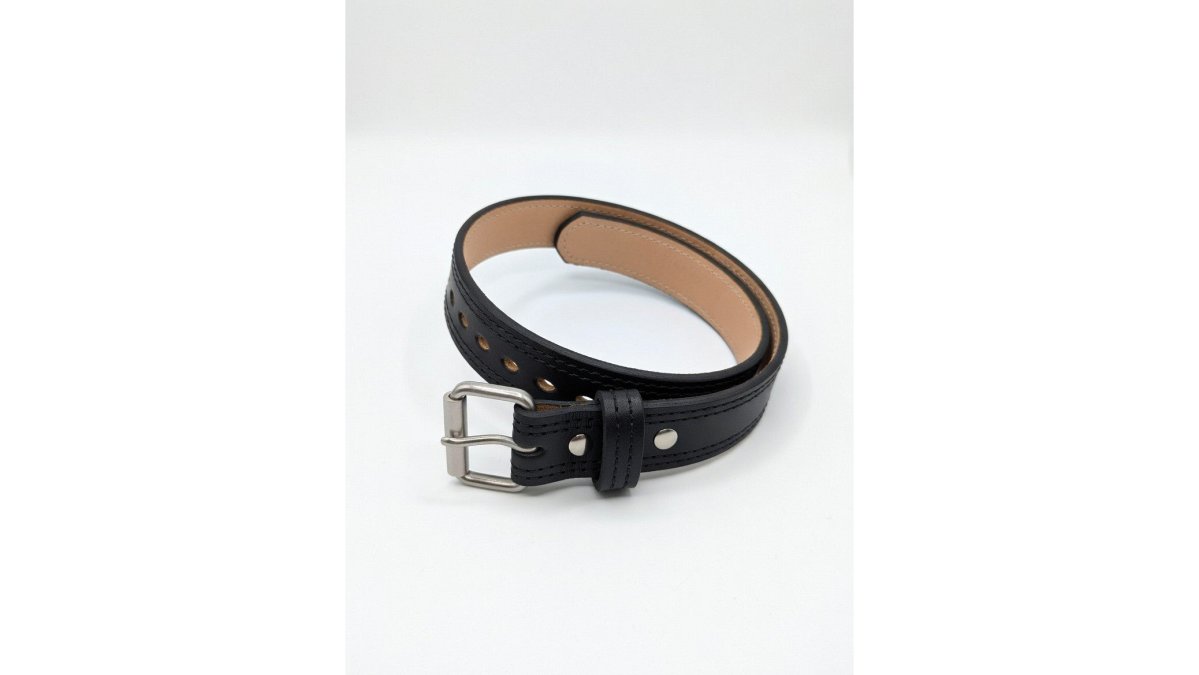
The best thickness for leather gun belts lands around 5/16 of an inch for most concealed carry setups, enough structural integrity to support a loaded pistol and spare magazine without folding over at the clips.
Concealed Carry Belt Stability: How Thickness Prevents Holster Sag
Concealed carry belt stability comes down to whether the belt resists deforming under the weight hanging from it. A thicker belt spreads that load over a wider band of leather, so no single point takes the full strain.
Durable Leather Belts for Men: Construction That Lasts Years
Durable leather belts for men are built from full-grain leather, not bonded or corrected-grain material. Full-grain keeps the hide's tight fiber structure intact, giving leather its tensile strength and abrasion resistance.
- Full-grain leather: intact fiber structure, ages well, resists stretching
- Bonded or genuine leather: glued scraps, separates and cracks early
- Double-layer construction: two leather plies bonded and stitched, far more rigid
- Single-layer: lighter and more flexible, but flexes under a heavy holster
Weight Distribution and All-Day Comfort
Comfort on a carry belt is a load-path problem, not a padding problem. A loaded compact pistol with a light and spare magazine can add two to three pounds to one side of your waist, all funneling through a strip of leather roughly an inch and a half wide, the only structure between that weight and your soft tissue.
Where the pressure actually lands
Two landmarks take most of the abuse:
- The iliac crest, the top ridge of your hip bone. A belt that is too thick and worn too high presses directly on this ridge when you sit, and the pressure is worst in a car seat or a low office chair where your torso folds forward.
- The lateral femoral cutaneous nerve path, a sensory nerve that runs under the inguinal ligament near the front of the hip. Sustained compression there produces the tingling or numbness some carriers describe as "carry leg." It is not a leather-quality problem; it is a pressure-and-position problem, and a belt that concentrates load into a narrow band makes it worse.
A common pattern among long-term carriers: notice the numbness in the first month, assume it is normal, then discover that dropping from a 1.75-inch belt to a 1.5-inch belt at the same thickness, or moving the holster a few degrees rearward, resolves it. The belt is not the only variable, but it is the one you can change without buying a new holster.
Bulk versus rigidity: the real trade-off
Bulk is the cost of rigidity, and the cost is not linear. Going from 1/4 inch to 5/16 inch buys a meaningful jump in sag resistance; going from 5/16 inch to 3/8 inch buys very little additional rigidity while adding thickness at the pant loops and pressure on the hip bone when seated. Most practitioners find the sweet spot at 5/16 inch for inside-the-waistband and 1.5-inch width, with thicker paying off only for heavy loads.
The clip-compatibility problem nobody warns you about
This is the most common reason a good belt gets returned. Holster clips are engineered to a specific belt thickness range, and a belt too thick for the clip will not seat fully, the clip rides on top of the leather instead of hooking behind it, so the holster can lift off during a draw.
A practical compatibility check before you buy:
- Plastic paddle and belt-loop clips (the kind molded into many production holsters) typically spec a maximum belt thickness around 1/4 inch. A 5/16-inch belt will often fit, but it may need to be threaded with effort, and the clip may not fully close.
- Metal spring clips generally tolerate more thickness because the spring has more travel, but a very thick belt can still splay the clip permanently.
- Soft loops and pull-the-dot snaps are the most forgiving because they wrap the belt rather than hooking it, and they are the safest choice if you are running a 5/16-inch or thicker belt.
- Discrete carry clips and tuckable clips are the least forgiving. They are designed to be low-profile, which means they have the least clearance for a thick belt.
Buying an oversized belt and cinching it tight to compensate for flex is a common mistake. Over-tightening concentrates pressure at the buckle and the hip, and it does nothing to stop the holster from rolling. Fix the rigidity, not the tension.
If your holster clips sit close to the buckle, check that the belt is stiff across that whole span. A belt can be rigid at the back and still flex near the front, which is exactly where appendix carry puts the most stress.
The Break-In Period: What to Expect from a Thick Leather Belt
A thick leather belt starts stiff on purpose, that stiffness is the feature you paid for, and it softens slightly over the first few weeks without losing structural integrity.
Choosing the Right Width: 1.25, 1.5, or 1.75 Inches
Width and thickness solve different problems. Thickness controls rigidity front to back, how much the belt resists folding under the holster's weight. Width controls how much surface area supports the holster, how well the belt fills your pant loops, and how far apart your holster clips can sit without the belt twisting between them.
| Width | Best For | Stitching | Pant Loop Fit | Notes |
|---|---|---|---|---|
| 1.25 inch | Tight belt loops, lower-profile carry, dress pants | One row | Fits loops under 1.5 inch | Slimmer look, less surface area for clips, less lateral support |
| 1.5 inch | Most full-size and compact pistols | Two rows | Fits loops 1.5 inch and up | The workhorse width for everyday carry |
| 1.75 inch | Heavy loads, open carry, duty use | Two rows | Needs loops 1.75 inch or wider | Maximum support, will not fit many casual pants |
Measure your pant loops before you buy
This is the step most buyers skip, and the one that causes the most returns. Take pants you actually carry in, lay them flat, and measure the inside width of a belt loop with a tape measure or calipers. Do this on three or four pairs, because loop widths vary by brand and cut.
- If your loops measure 1.5 inches or less, a 1.75-inch belt will not thread through them. It will either not fit at all or it will distort the loop and pull the waistband out of shape.
- If your loops measure 1.5 inches, a 1.5-inch belt fits but with almost no clearance. That is fine for a belt you leave threaded, but it makes daily on-and-off slower.
- If your loops measure 1.75 inches or wider, you have room for any of the three widths.
How width interacts with holster clip spacing
A holster with two clips spaced several inches apart puts a twisting load on the belt between them. The wider the belt, the more material resists that twist, which is why a 1.75-inch belt holds a two-clip inside-the-waistband holster more securely than a 1.25-inch belt of the same thickness.
Matching width to body type and carry position
- Slim build, appendix carry: 1.25 inch or 1.5 inch. A 1.75-inch belt on a narrow waist tends to ride up when seated because there is less hip to anchor against.
- Average build, strong-side hip carry: 1.5 inch. This is the most forgiving combination across body types and carry positions.
- Larger build or duty-style load: 1.75 inch. The wider belt distributes a heavier load across more of the waist and resists the rearward migration that heavier rigs tend to develop.
The 1.5-inch width suits most concealed carriers running a compact or full-size pistol. The 1.75-inch Gun Belt Max is built for heavier loads and open carry.
A note on width and concealment
A wider belt can improve concealment in one specific way: it holds the holster more vertically, keeping the grip tucked closer to the body instead of canting outward. The trade-off is that a 1.75-inch belt is harder to hide under a tucked shirt because the belt itself is more visible at the waistline. For deep concealment, 1.25 inch or 1.5 inch is the better choice.
Conclusion: Why a Thick Leather Gun Belt Is Worth the Investment
The benefits of thick leather gun belts come down to control: the holster stays where you put it, the draw is consistent, and the belt holds its shape for years instead of months. Thickness, full-grain leather, and internal reinforcement deliver that, and no amount of tightening a thin belt will replace them.
Frequently Asked Questions
How thick should a leather gun belt be for everyday carry?
For most everyday carry setups, a leather gun belt should be at least 1/4 inch thick, with 5/16 inch being the sweet spot for full-size pistols and heavier holster setups. Armour Belts' Gun Belt comes in at about 5/16 inch, which provides the rigidity needed to keep a holster from rolling or sagging during all-day wear. Thinner belts, even if made from quality leather, tend to flex under load and lose their shape over time.
Does a thicker leather belt actually prevent holster sagging?
Yes. A thick, full-grain leather belt resists lateral and vertical flex, which is what causes holster sag. When the belt stays rigid, the holster stays locked in place, so you get consistent retention and a cleaner draw. The key is not just thickness but also the leather's structural integrity. A 5/16-inch belt with quality stitching and a stiff core will outperform a thinner belt every time, especially when carrying a full-size pistol with a light and spare mag.
What is the best thickness for leather gun belts if I carry inside the waistband?
For inside-the-waistband carry, a 5/16-inch belt is the best thickness for leather gun belts because it provides enough rigidity to support the holster without adding excessive bulk. The Armour Belts Gun Belt is designed for IWB and appendix carry, and its 5/16-inch thickness keeps the holster from sagging while remaining comfortable against the waistline. If you want a lower profile, the 1.25-inch width option reduces bulk while keeping the same thickness.
How do I know if a leather gun belt is actually full-grain and not bonded leather?
Full-grain leather has visible natural grain and imperfections, and it develops a patina over time rather than peeling or cracking. Bonded leather, by contrast, is made from leather scraps glued together and often falls apart within months. Look for belts that specify full-grain construction and come with a lifetime warranty on materials and workmanship. Armour Belts uses full-grain leather and backs each handcrafted belt with a lifetime warranty, so you can verify quality before you buy.
Share:
Why Leather Gun Belts Sag: Causes and Fixes
Hanks Belts vs Daltech Force: Which Gun Belt Wins?