Table of Contents
- Why Measuring for a Gun Belt Is Different
- What You'll Need Before You Start
- Step-by-Step: How to Measure Your Waist for a Gun Belt
- The Difference Between Pant Size and Belt Size
- How to Measure for Concealed Carry: IWB vs. OWB
- Gun Belt Fitment Tips for Comfort and Support
- Common Measuring Mistakes to Avoid
- Frequently Asked Questions
Last Updated: September 21, 2026
Why Measuring for a Gun Belt Is Different
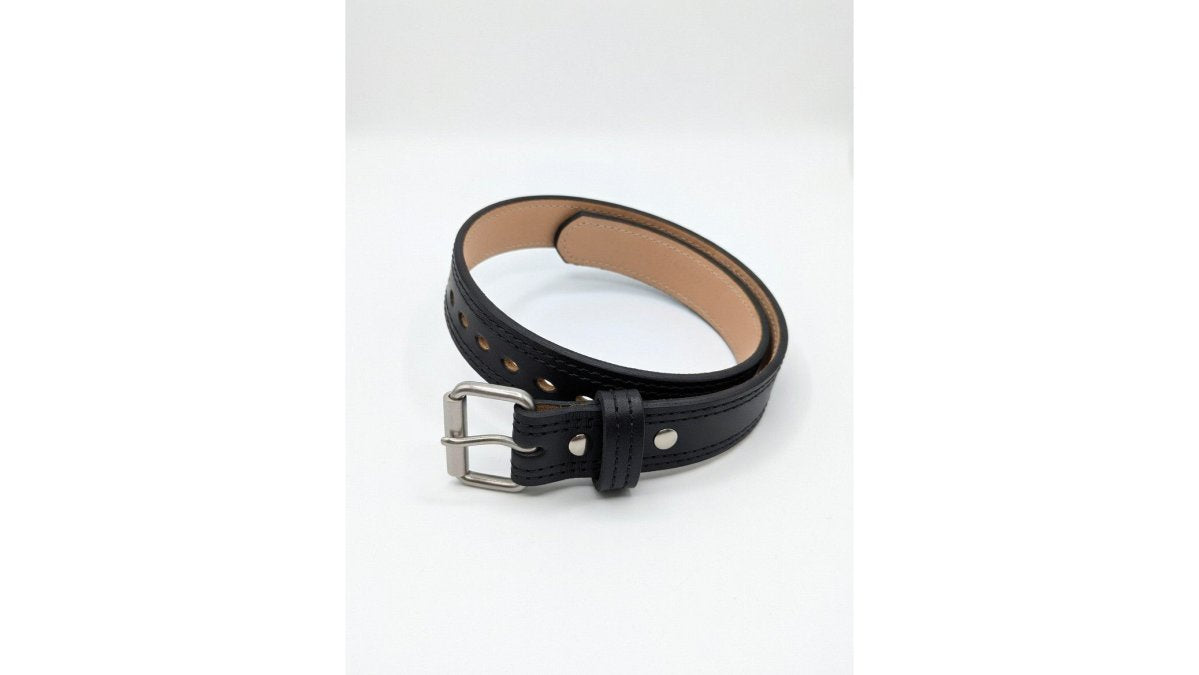
A gun belt carries real weight and must hold it without sagging, twisting, or cutting into you. This guide from Armour Belts walks through how to measure waist for gun belt use so your holster stays put all day.
Most people assume they can order their pants size and be done, the fastest way to end up with a belt that sags under a loaded pistol.
A gun belt supports a holster, a firearm, and often a spare magazine. That load pulls down and outward. A thin dress belt will flex and roll. A proper carry belt resists that force, but only if it fits correctly.

Getting the measurement right matters for three reasons:
- Too long leaves no room to cinch tight
- Too short cannot reach the buckle
- Too loose lets the holster shift when you move
According to guidance from the U.S. Concealed Carry Association, belt fit is one of the most overlooked parts of a safe and comfortable carry setup.
What You'll Need Before You Start
Gather your tools first so you only measure once. The process takes about five minutes. Have on hand:
- A flexible cloth tape measure
- A belt you already wear and like
- A mirror, or a friend to help
- A pen and paper
- Your holster, if you already own one
A cloth tape measure is the key tool.
Step-by-Step: How to Measure Your Waist for a Gun Belt
The best way to measure your waist for a gun belt is to run a cloth tape through your actual belt loops, not around bare skin, the true path your belt will travel.

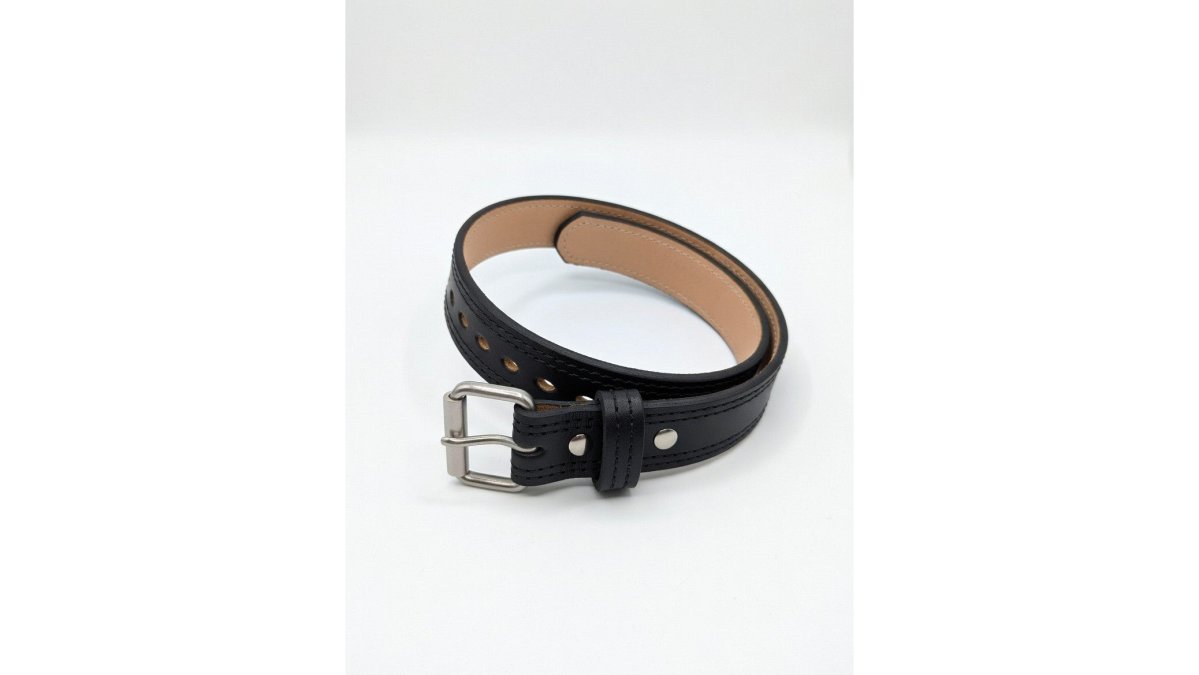
Here are the core steps:
- Put on the pants you carry in most often.
- Thread the tape through your belt loops, just like a belt.
- Bring the ends together at the front, where your buckle sits.
- Pull snug, but do not cinch tight.
- Read the number where the tape meets itself.
- Write it down.
Using a Cloth Tape Measure
The cloth tape method gives the most accurate reading. Wear the pants and holster position you use most, then:
- Stand up straight and relax your stomach.
- Thread the tape through the belt loops at the height you wear your belt.
- Keep the tape flat against the pants, not twisted.
- Pull it snug so it sits like a worn belt.
- Note the measurement in inches.
Using an Existing Belt for Reference
If you own a belt that fits well, measure it instead, faster and often just as accurate. Lay it flat on a table, then:
- Stretch it out straight, without pulling.
- Measure from the tip of the buckle to the hole you use most.
- That distance is your belt size.
The Difference Between Pant Size and Belt Size
Your pant size and belt size are not the same number, and mixing them up is the most common sizing error. The difference usually runs about two inches: pant size measures your waist where the waistband sits, while a belt travels through the loops, adding the thickness of the pants and the buckle overlap.
A simple rule helps:
| Your Measurement | What It Means | Belt Size To Order |
|---|---|---|
| Pant size 34 | Waistband size | Usually 36 |
| Tape through loops reads 36 | True belt path | Order 36 |
| Existing belt to center hole reads 38 | Worn belt length | Order 38 |
How to Measure for Concealed Carry: IWB vs. OWB
How you carry changes how you measure, because the holster changes the geometry of the belt path. The steps for how to measure for concealed carry differ between inside-the-waistband (IWB) and outside-the-waistband (OWB) setups, and again between appendix and strong-side carry. Most guides treat all carry methods as identical. They are not.
IWB carry
The holster sits inside your waistband, adding bulk that pushes the belt outward at the holster and pulls it tighter everywhere else. Measure with your holster in place if you own it; if not, add roughly one inch to your tape reading for a typical IWB rig. A slim single-clip holster may need less, while a double-clip holster with a wing or claw may need more.
OWB carry
The holster rides on the outside of the belt, adding almost nothing to the belt path, so your measurement stays close to your normal belt size. The trade-off: an OWB rig hangs further from your body, increasing leverage, so a stiffer belt matters more here than extra length.
Appendix carry
The belt crosses the front of your body, over the curve of your abdomen and just below the iliac crest, the hardest place to keep a belt flat. Measure at the front and expect a slightly shorter reading than a side measurement because the front of the waist curves inward. Appendix carry also puts the most rotational load on the belt, so a reinforced core does real work here.
Strong-side carry
Measure normally. The load sits at your hip, the flattest, most stable part of the belt path. Strong-side carry is the most forgiving position for belt length and stiffness, which is why it is often recommended for new carriers.
Here is the quick breakdown:
- IWB carry: Add roughly one inch for holster bulk; more for a winged or double-clip holster
- OWB carry: Use your standard belt measurement; prioritize stiffness over length
- Appendix carry: Measure at the front; expect a slightly shorter reading and the highest demand on belt stiffness
- Strong-side carry: Measure normally; the most forgiving position for length and stiffness
Gun Belt Fitment Tips for Comfort and Support
Good gun belt fitment tips come down to thickness, width, and stiffness, and how those traits interact with your body type and load. What decides whether a belt works is how it behaves on your frame.
Body type adjustments
This is where fit is won or lost.
If you have a larger midsection, the belt tends to ride lower in front than at the sides, because the abdomen pushes it down and forward. Two adjustments help: measure at the height where the belt actually settles, not where you want it to sit, and consider a wider 1.75-inch belt to spread pressure and reduce digging. A reinforced core also resists the downward roll a soft belt develops under a heavy holster.

Fitment notes that apply to everyone
- Wear the belt at your natural waist, above the hip bone
- Keep the buckle centered or slightly off-center for appendix carry
- Check that the holster clips sit on the stiffest part of the belt
- Test sitting, standing, and bending before you trust the fit
The iliac crest, the top ridge of your hip bone, is a useful landmark. A belt that rides right on it will dig in when you sit. Move it just above or below. For appendix carry, the belt should cross just below the iliac crest so the holster sits flat against the abdomen rather than pressing into the bone.
Common Measuring Mistakes to Avoid
Most sizing problems trace back to a handful of repeat mistakes. Avoid these and you will likely get the fit right the first time:
- Measuring over bulky clothing instead of your normal pants
- Using pant size as belt size
- Measuring a stretchy belt and expecting a leather number
- Pulling the tape too tight or leaving it too loose
- Forgetting to add room for an IWB holster
- Measuring a worn-out belt that has already stretched
Frequently Asked Questions
How do I size my gun belt?
To size a gun belt, measure your actual waist circumference at the height where you wear your pants, not your pant size. Use a cloth tape measure over your clothing, or measure an existing belt from the buckle fold to the hole you use most. Add 2-4 inches for IWB carry to account for holster and firearm thickness. Armour Belts recommends measuring twice for accuracy.
What size belt am I if I have a 32 waist?
If your true waist measures 32 inches, you typically need a belt sized 34 or 36, depending on your carry method. For OWB carry, add 2 inches; for IWB, add 4 inches to accommodate the holster and firearm inside your waistband. Always follow the manufacturer's sizing chart, as belt sizing varies by brand and style.
Should I measure my waist or my pants size for a gun belt?
Measure your actual waist, not your pants size. Pant sizes often differ from true waist measurements due to vanity sizing and brand variations. For a gun belt, use a cloth tape measure around your bare waist or over a thin shirt at the height you carry your firearm. This ensures proper fitment and support.
Will a 42 inch belt fit a 34 waist?
A 42-inch belt is generally too large for a 34-inch waist unless you carry a full-size pistol with a holster and magazine pouch that adds significant bulk. Typically, a 34-inch waist needs a 36-38 inch belt for OWB or a 38-40 inch belt for IWB. Always check the specific brand's sizing guide, as measurements can vary.
Share:
American Made Leather Tactical Belts: 2026 Guide
Why Leather Gun Belts Sag: Causes and Fixes