
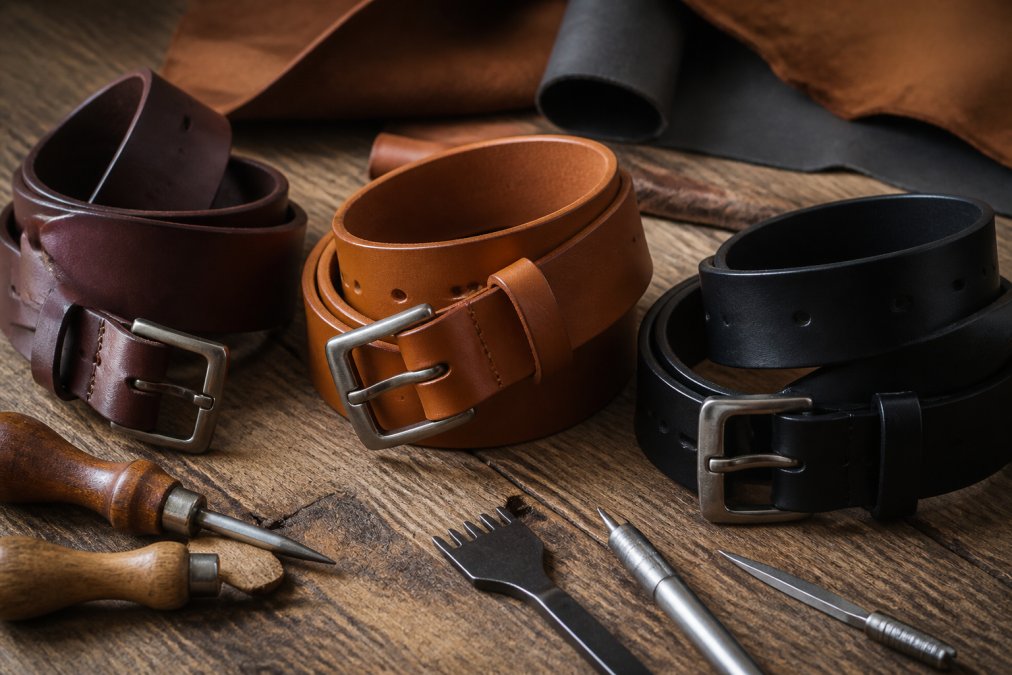
Table of Contents
- Quick Comparison: Durable Leather Belts for Men
- The Benefits of a Full Grain Leather Belt
- Best Leather for Gun Belts: What Actually Holds Up
- How to Measure for a Leather Belt
- Top Durable Leather Belts for Men Reviewed
- How Leather Ages: Patina, Repairability, and Long-Term Value
- Conclusion
- Frequently Asked Questions
Last Updated: September 18, 2026
Quick Comparison: Durable Leather Belts for Men
The best durable leather belts for men use full grain leather, cut thick enough to resist sag, with hardware that won't fail under load. Armour Belts handcrafts full grain leather gun belts in Michigan, and this guide compares the build details that separate a decade-long belt from one that curls in six months.
Most belts sold as "genuine leather" are split or bonded hides glued together and stamped with a grain pattern. They look fine in the store, then the layers separate, the holes stretch, and the belt folds under a holster's weight. Full grain leather keeps its fiber structure intact, so it carries weight without deforming.
Below, we break down leather grades, sizing, hardware, and the belts worth your money in 2026. Most guides rank belts by brand name instead of hide thickness and stitch construction, the two things that determine how long a belt lasts.
| Belt | Price | Width | Thickness | Best For |
|---|---|---|---|---|
| Ceres Belt | $95 | 1.5 in | Horween leather | Dress and casual wear |
| Casual Gun Belt | $119 | 1.25 or 1.5 in | Just under 1/4 in | Everyday carry, Kydex holsters |
| Gun Belt | $125 | 1.25 or 1.5 in | Approx. 5/16 in | IWB and appendix carry |
| Enceladus Belt | $125 | 1.5 in | Horween leather | Statement dress wear |
| Embossed Horse and Floral | $125 | 1.25 or 1.5 in | Approx. 5/16 in | Custom styling |
| Gun Belt Max | $130 | 1.75 in | Approx. 5/16 in | Heavy holster and mag rigs |
| Elephant Hide Belt | $225 | Standard | Exotic hide | Formal and business wear |
The Benefits of a Full Grain Leather Belt
A full grain leather belt is cut from the outermost layer of the hide, where fibers are densest and most tightly interlocked. That density resists stretching at the buckle holes, holds shape under load, and develops a patina instead of cracking.

Lower grades trade that away. Top-grain leather has the surface sanded down, thinning the strongest layer. Split leather uses the weaker inner layer. Bonded leather is scraps glued and pressed into a sheet. All three cost less and none hold up under daily carry.
The practical difference shows up in tensile strength and edge finishing. A full grain strap keeps clean, burnished edges because there's solid structure to burnish; a bonded belt frays once moisture reaches the glue line.
Best Leather for Gun Belts: What Actually Holds Up
The best leather for gun belts is thick, vegetable-tanned or oil-tanned full grain hide, roughly 1/4 inch to 5/16 inch thick, stiff enough to distribute a holster's weight across the whole waistband instead of one point. Thickness and temper matter more than brand.
Vegetable-tanned leather is tanned with plant-based tannins over a longer cycle, coming out firm, holding shape, and taking a deep patina. Oil-tanned leather is softer and suits casual belts but flexes more under a heavy pistol. For appendix or inside-the-waistband carry, choose the stiffer option.
Two construction details separate a real gun belt from a fashion belt:

- Stitch density and rows. Two rows of stitching along a 1.5-inch strap spread load across the leather instead of concentrating it at one seam. Single-row stitching on a narrow 1.25-inch belt keeps a lower profile.
- Riveted or screwed construction. Chicago screws let you swap buckles and tighten hardware without sending the belt back. Glued-and-stapled construction fails first at the buckle fold.
A common mistake is buying a 1.25-inch dress belt to carry a full-size pistol with a light. Width is structural: the wider the strap, the more surface area supports the holster.
How to Measure for a Leather Belt
To measure for a leather belt, run a tape measure through the belt loops of the pants you'll wear most, over your clothing, and note the length. That number is your belt size, not your jeans-label waist measurement.
Pant sizing and belt sizing are not the same number. A 34-inch waistband often needs a 36-inch belt because the belt sits over the waistband, not inside it.
A quick checklist before you order:
- Wear the pants you carry in most often
- Thread the tape through the loops, over the waistband
- Measure to where the buckle prong sits comfortably, not tight
- Round to the nearest even size
- Note whether you carry inside or outside the waistband; IWB setups often need a touch more room
Sizing by Body Type and Pant Fit
Most sizing charts assume an average build and a mid-rise pant, covering maybe half of buyers. The rest need to adjust for how their pants sit and how their body changes over a year.
Top Durable Leather Belts for Men Reviewed
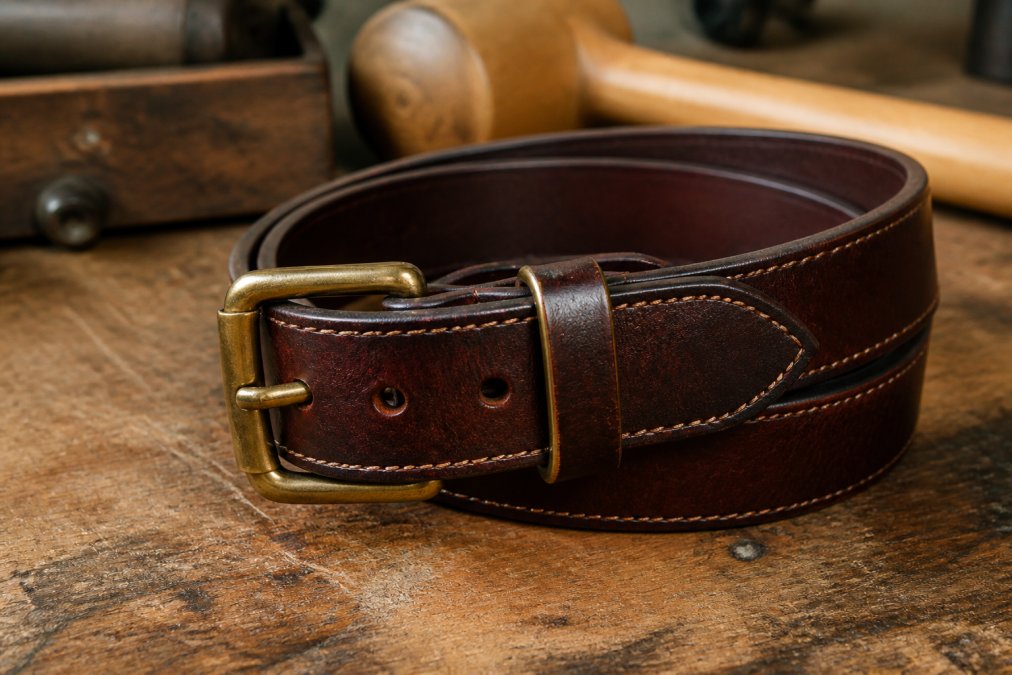
Every belt below is handcrafted by Armour Belts from full grain leather, cut to order, and backed by a lifetime warranty. Most orders ship within one week.

How Leather Ages: Patina, Repairability, and Long-Term Value
Full grain leather gets better with use. Oils from your hands and body work into the hide, darkening it and building a patina no two belts share. Bonded and split leathers can't do this because there's no intact grain structure to develop.
What Patina Actually Looks Like Over Time
Patina isn't a finish; it's the visible record of how the leather was used, predictable enough that you can tell what a belt has been through by looking at it.
- Months 1-6. The leather is still breaking in. It conforms to your waist, the buckle fold softens, and the first darkening shows at the holes you use most. Vegetable-tanned straps often look stiff and matte at this stage.
- Years 1-3. Color deepens across the strap, unevenly. The area behind the buckle darkens fastest because it flexes and absorbs the most hand oil. Shop-burnished edges may need a touch-up.
- Years 3-7. The strap takes on a glossy sheen in high-contact zones and a matte finish elsewhere. Scratches stop reading as damage and blend into the surface. This is the stage most people mean when they say a belt "has character."
- Years 7-10+. A well-cared-for full grain belt looks like a different object than the day it shipped: several shades darker, smooth, and structurally intact. Bonded belts rarely reach this stage because the glue line fails first.
Repairability Beyond the Buckle
Most "lifetime warranty" language covers the buckle and maybe the stitching. The failures that actually end a belt's life happen at the edges and holes, and those are repairable at home with a small kit.
Care Routine That Supports All of the Above
Wipe the belt with a dry cloth, apply a light coat of leather conditioner a couple of times a year, and let it dry away from direct heat. Avoid soaking it. A week or two of break-in is normal as the leather conforms to your waist. In a dry climate or with daily wear, condition quarterly instead.
Conclusion
Finding durable leather belts for men comes down to three things you can verify before buying: the leather grade, the hide thickness, and how the buckle attaches. Skip any of those and you're guessing.
Frequently Asked Questions
What brand makes the most durable belts?
Durability comes down to leather grade and construction, not just brand name. Belts made from full grain leather with solid hardware and riveted or stitched construction last significantly longer than those using bonded or split leather. Armour Belts uses full grain leather and Horween leather options, handcrafted in Michigan, with a lifetime warranty that backs the claim. Look for visible grain, thick hide, and metal buckles that won't bend under load.
What is the most durable leather for belts?
Full grain leather is the most durable option because it retains the hide's entire grain structure, which delivers the highest tensile strength and fiber density. Vegetable-tanned and oil-tanned full grain leathers resist stretching and cracking better than top-grain or split leather. For gun belts specifically, full grain hides around 5/16 inch thick provide the rigidity needed to support a holstered firearm without sagging, even with daily carry.
How long should a good leather belt last?
A well-made full grain leather belt with solid brass or stainless steel hardware can last 10 years or more with basic care. Customers report wearing Armour Belts daily for over a decade. The key factors are leather grade, hide thickness, and whether the buckle attaches with Chicago screws or rivets that can be replaced. Bonded and split leather belts typically fail within one to two years because the layers separate or the material cracks at stress points.
What is the difference between top grain and full grain leather for belts?
Full grain leather keeps the outermost layer of the hide intact, preserving the tight fiber structure that gives it strength and a natural grain pattern that develops patina over time. Top grain leather has that outer layer sanded away to remove imperfections, which makes it thinner and weaker. For a belt that needs to support a holster or heavy gear, full grain is the better choice because it resists stretching and holds its shape under load.
How do I measure for a leather belt?
Armour Belts handcrafts each belt to your exact specifications for a custom fit. To ensure the best fit, follow the detailed measuring instructions provided on our product pages.
Share:
Armour Belts Concealed Carry Lineup: Which Belt for Everyday Use
American Made Leather Tactical Belts: 2026 Guide