

Table of Contents
- Why a Stiff Leather Belt Matters for Appendix Carry
- Quick Comparison: Stiff Leather Belts for Appendix Carry
- What Makes the Best Appendix Carry Belt in 2026
- Choosing a Leather Gun Belt for Concealed Carry
- Why a Reinforced EDC Belt Beats a Standard Belt
- How to Measure Belt Size Accurately Before You Buy
- Top Stiff Leather Belts for Appendix Carry: Our Picks
- Common Mistakes to Avoid with Appendix Carry Belts
- Frequently Asked Questions
Last Updated: October 12, 2026
Why a Stiff Leather Belt Matters for Appendix Carry
A stiff leather belt is the foundation of a reliable appendix carry setup: the belt, not the holster, keeps the gun from rolling forward and printing through your shirt.
An appendix inside-the-waistband (AIWB) holster presses against the belt line at the front of the body, where there is the least natural support. A dress belt folds under that load; a reinforced gun belt stays flat, holds the holster mouth open, and spreads the weight of a full-size pistol across a wider band of leather.

That difference shows up in concealment: a sagging belt lets the grip tilt outward and print, while rigidity keeps the grip tucked in and the holster in the same place every draw.
Quick Comparison: Stiff Leather Belts for Appendix Carry
Here is how our lineup breaks down for appendix carry.
| Belt | Price | Width | Thickness | Best For |
|---|---|---|---|---|
| Gun Belt | $125.00 | 1.25" or 1.5" | ~5/16" | Best overall for AIWB |
| Gun Belt Max | $130.00 | 1.75" | ~5/16" | Heavy rigs, full-size pistols |
| Casual Gun Belt | $119.00 | 1.25" or 1.5" | Just under 1/4" | Lightest rigidity-to-comfort balance |
| Sharkskin Inlay | $150.00 | 1.25" or 1.5" | ~5/16" | Premium look, standard support |
| Stingray Inlay | $150.00 | 1.25" or 1.5" | ~5/16" | Premium look, standard support |
| Elephant Inlay | $150.00 | 1.25" or 1.5" | ~5/16" | Premium look, standard support |
Every belt in that table is handcrafted in Michigan, cut to your measurement, and backed by a lifetime warranty on materials and workmanship. Most orders ship within about a week.

What Makes the Best Appendix Carry Belt in 2026
Three things separate a belt that works for appendix carry from one that just looks the part: rigidity, buckle profile, and sizing.
Rigidity and Reinforced Support
Rigidity is what stops the holster from rolling. A belt built for AIWB should hold its shape when you bend it and snap back flat when you let go, stiffness comes from leather thickness and construction, not a marketing label.
Our standard gun belts run about 5/16 inch thick. The 1.5-inch width carries two rows of stitching; the 1.25-inch width uses one for a lower profile. Both are the same thickness, so the choice is about your belt loops, not support.
Low-Profile Buckles and Adjustability
Buckle bulk is the most overlooked part of appendix concealment: a thick, wide buckle sits where your holster does and shows through a shirt faster than the gun does.
Our buckles attach with Chicago screws, so you can swap them without sewing, a lower-profile buckle for daily carry, something dressier for a formal event. Choose leather and thread color at checkout.
Choosing a Leather Gun Belt for Concealed Carry
A leather gun belt for concealed carry is engineered to carry weight, not just hold up trousers. A dress belt stretches and folds; a proper gun belt keeps its shape under load.

Full-grain leather is the material to look for: the outermost layer of the hide, it holds up better than corrected-grain or bonded leather over years of daily wear.
Stitching is the other tell. We use military-grade nylon thread, which resists the abrasion of thousands of draws and reholsters.
Why a Reinforced EDC Belt Beats a Standard Belt
A reinforced EDC belt carries weight like a load-bearing strap, distributing force across the full width of the band instead of concentrating it at the two or three inches around the holster clips.
That is why a reinforced EDC belt feels different on day one: it does not fold when you sit, need re-tightening after a long drive, or let the holster migrate from appendix to hip over a workday.
The trade-off is real: a stiffer belt is less forgiving against the body, and the first week of appendix carry will feel different. Most people find the stability worth it, but for the least aggressive step up, the Casual Gun Belt sits just under 1/4 inch thick as the balance point between rigidity and comfort.
How to Measure Belt Size Accurately Before You Buy
Measuring belt size accurately means measuring a belt that already fits, or measuring around your waist with your holster in place if you carry inside the waistband.
Here is the process we recommend:
- Take a belt you already wear and lay it flat on a table.
- Measure from the tip of the buckle end to the hole you actually use, not the tip, not the last hole, the one you buckle into.
- If you carry IWB, add the thickness of your holster and gun to that measurement. A typical AIWB holster with clips adds roughly 3/8 to 1/2 inch of material between your body and the belt, and a full-size pistol with a weapon light can push that closer to 3/4 inch.
- Write down the number and order that size.
A common pattern: a 34-inch pant size lands around a 36- to 37-inch belt measurement once you account for the holster and how the belt sits over the waistband. That two- to three-inch gap is the most common reason a custom belt comes back for a remake.
Appendix-Specific Fit and Body-Position Guidance
Sizing is only half the fit question.
Buckle placement. Offset the buckle one to two inches toward your strong-side hip, away from the holster.
Seated comfort. Sit in a chair, a car seat, then a stool.
Holster clip interaction. Most AIWB holsters use clips or loops that hook over the belt.
If you are between sizes or carry a full-size pistol with a light and spare magazine, size up and let us know what you are carrying.
Top Stiff Leather Belts for Appendix Carry: Our Picks
Every belt below is cut to your measurement, handcrafted in Michigan, and covered by a lifetime warranty on materials and workmanship. The differences come down to thickness, width, and finish.
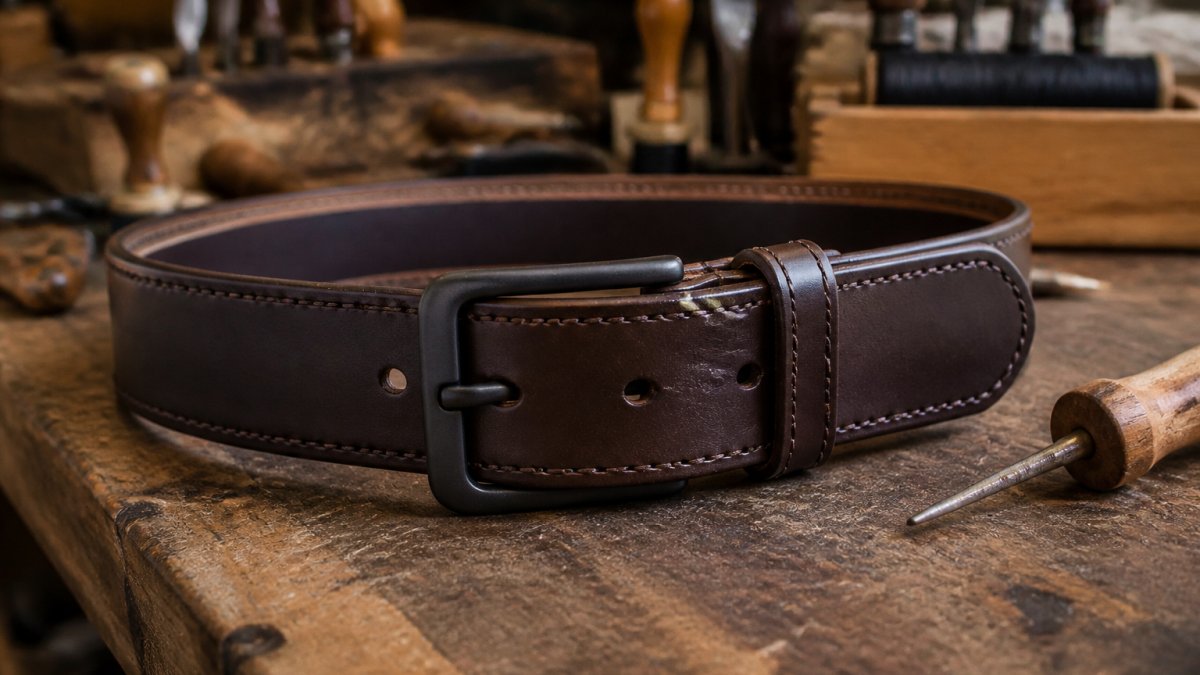
Armour Belts Gun Belt: Best Overall for AIWB
Our top pick for most appendix carry setups is the Gun Belt at $125.00: full-grain leather, about 5/16 inch thick, built so the holster does not sag under an inside-the-waistband load.
Choose the 1.5-inch width for most full-size and compact pistols, two rows of stitching, our workhorse.
Where it falls short: it starts stiff on purpose, and the first week is a break-in period. That is the trade for a belt that will not roll.
Gun Belt Max: Maximum Width for Heavy Rigs
If you carry a full-size pistol with a weapon light and spare magazine pouch, the Gun Belt Max at $130.00 is the answer: 1.75 inches wide, about 5/16 inch thick, with two rows of stitching.
That extra width spreads a heavy rig across more of your waist when total weight climbs. It is the least subtle option in the lineup, a feature, not a flaw, for a duty or range belt.
Casual Gun Belt: Lightest Rigidity-to-Comfort Balance
The Casual Gun Belt at $119.00 is our lightest option, just under 1/4 inch thick, and the belt we recommend to anyone stepping up from a standard belt for the first time. It comes in 1.25-inch or 1.5-inch widths and works with most Kydex holsters and C-Clips.
An optional Kydex stiffener insert pushes rigidity much higher, and that version carries a single row of stitching. If thickness against your body has been the reason you avoided a real gun belt, start here.
Sharkskin, Stingray, and Elephant Inlay: Premium Leather Options
The three inlay belts, Sharkskin, Stingray, and Elephant, all come in at $150.00. Each is about 5/16 inch thick, available in 1.25-inch or 1.5-inch widths, and built to the same standard as the Gun Belt underneath the inlay.
These are for the buyer who wants a belt that looks as good with a sport coat as at the range. The 1.5-inch version carries two rows of stitching; the 1.25-inch carries one for a cleaner line.
Common Mistakes to Avoid with Appendix Carry Belts
The first mistake is buying on width and ignoring thickness. A wide belt that is thin will still fold.
The second is ordering pant size instead of measuring. A custom belt cut to the wrong measurement is a belt you cannot use.
The third is chasing a soft belt because day one feels stiff.
The fourth is treating the belt as an afterthought to the holster. In practice, the belt determines whether the holster works.
Leather Construction Details That Decide How a Belt Ages
Full-grain versus bonded versus corrected-grain. Full-grain leather is the outermost layer of the hide, with the grain intact, the tightest fiber structure and the most resistance to stretching.
Edge wear and care. Belt edges take the most abrasion, because that is where the holster clips ride.
Stitching as a wear indicator. Military-grade nylon thread resists the abrasion of thousands of draws and reholsters.
Frequently Asked Questions
What is the best belt for appendix carry?
A stiff leather belt designed for appendix carry, like the Armour Belts Gun Belt, provides the rigidity needed to keep a holster from sagging or shifting. Look for full-grain leather about 5/16 inch thick, a width of 1.25 or 1.5 inches, and a low-profile buckle. These features support the weight of a firearm and magazine pouch while keeping the belt flat against your body for better concealment.
How stiff should a belt be for appendix carry?
A belt for appendix carry should be stiff enough to prevent the holster from rolling or sagging, but not so rigid that it digs into your hips when sitting. Leather belts around 5/16 inch thick, like those from Armour Belts, start firm and break in slightly over time. That initial stiffness is intentional; it keeps your firearm secure and reduces printing during all-day wear.
Can you use a regular leather belt for concealed carry?
A regular leather belt often lacks the thickness and reinforced construction needed for concealed carry. Dress belts tend to fold and sag under the weight of a holstered firearm, which can cause shifting and printing. A dedicated leather gun belt for concealed carry, such as the Armour Belts Gun Belt, uses full-grain leather and military-grade nylon thread to stay flat and support your gear.
How do you choose the right belt size for appendix carry?
To measure belt size accurately for appendix carry, do not use your pant size. Instead, measure a belt you already own that fits well, or measure around your waist with your holster in place if you carry inside the waistband. Armour Belts recommends measuring with the holster on and ordering that exact length, because a gun belt that is off by an inch will not fit correctly.
What belt width works best with an appendix-carry holster?
A 1.5-inch belt is the most common choice for appendix carry because it fits most holster clips and belt loops while providing ample support. If your pants have tight belt loops or you prefer a lower profile, a 1.25-inch belt works well and is available from Armour Belts in the same 5/16-inch thickness. Both widths offer the same rigidity, so the choice comes down to holster compatibility and comfort.
Getting appendix carry to disappear under a shirt comes down to one piece of gear most people buy last: the belt. Armour Belts handcrafts full-grain leather gun belts in Michigan, cut to your exact measurement, with 5/16-inch thickness for real holster support, Chicago screw buckles you can swap anytime, and a lifetime warranty on materials and workmanship. Most orders ship within about a week. Shop now at Armour Belts and carry with a belt that holds its shape from the first draw to the last.
Share:
Full Grain vs Bonded Leather Belts: What Lasts
How to Break in Leather Belts: A 2026 Guide