
Table of Contents
- Quick Comparison: American Made Leather Tactical Belts
- How to Measure for a Gun Belt (Get This Right First)
- Reinforced Leather Gun Belt Benefits: Why Stiffness Matters
- The Best Concealed Carry Gun Belt Options for 2026
- Belt Width, Holster Compatibility, and Everyday Carry Performance
- Maintenance and Leather Care for a Handcrafted Gun Belt
- How Body Type Affects Fit, Weight Distribution, and Comfort
- Conclusion: Choosing Your American Made Leather Tactical Belt
- Frequently Asked Questions
Last Updated: September 20, 2026
Quick Comparison: American Made Leather Tactical Belts
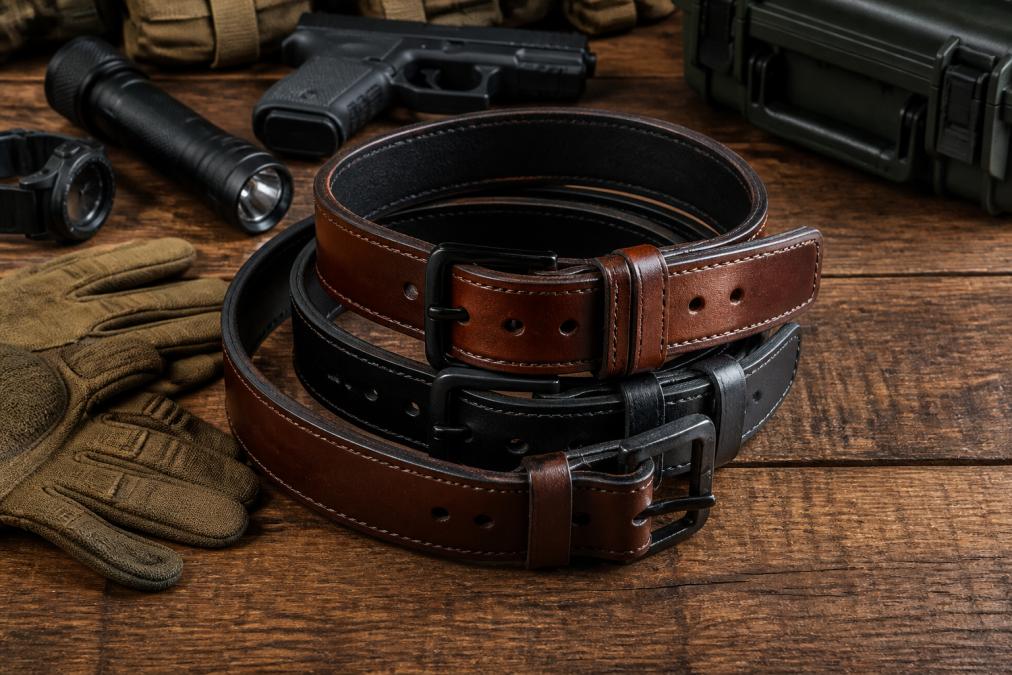
Leather tactical belts are not a fashion accessory with a holster clipped to it. It is the foundation that keeps a firearm stable, concealed, and accessible all day. This guide from Armour Belts breaks down what separates a real American made leather tactical belt from a stiff-looking imitator.
Here is the short version before the details:
| Belt | Price | Width | Thickness | Best For |
|---|---|---|---|---|
| Gun Belt | $125.00 | 1.25 in or 1.5 in | ~5/16 in | Everyday concealed carry |
| Gun Belt Max | $130.00 | 1.75 in | ~5/16 in | Duty and heavy holster rigs |
| Casual Gun Belt | $119.00 | 1.25 in or 1.5 in | Just under 1/4 in | Low-profile daily wear |
| Embossed Horse and Floral Belt | $125.00 | 1.25 in or 1.5 in | ~5/16 in | Dress and BBQ carry |
| Sharkskin, Stingray, or Elephant Inlay | $150.00 | 1.25 in or 1.5 in | ~5/16 in | Statement leather with full support |
How to Measure for a Gun Belt (Get This Right First)
Measure for a gun belt by sizing your waistband, not your pants. Order the length matching your actual waist measurement in inches, taken with a soft tape where the belt sits, not the number on your jeans tag.


- Wear the pants and holster setup you carry most
- Thread a soft tape through your belt loops, over the holster
- Pull snug, the way you wear the belt, and read the number
- Round up to the next inch if you are between sizes
- Note whether you carry appendix or strong-side, since holster bulk changes the reading
Reinforced Leather Gun Belt Benefits: Why Stiffness Matters
Stiffness is the whole point of a reinforced leather gun belt. A rigid belt spreads the weight of a holstered firearm across a wider area of your hips, so the gun stays put instead of dragging the belt down.
The practical payoff shows up in three ways:
- Sag resistance: the belt holds its shape through a full day of sitting, standing, and driving
- Holster support: clips and loops stay locked in place instead of migrating around your waist
- Consistent draw: the gun sits at the same angle every time you reach for it
The Best Concealed Carry Gun Belt Options for 2026
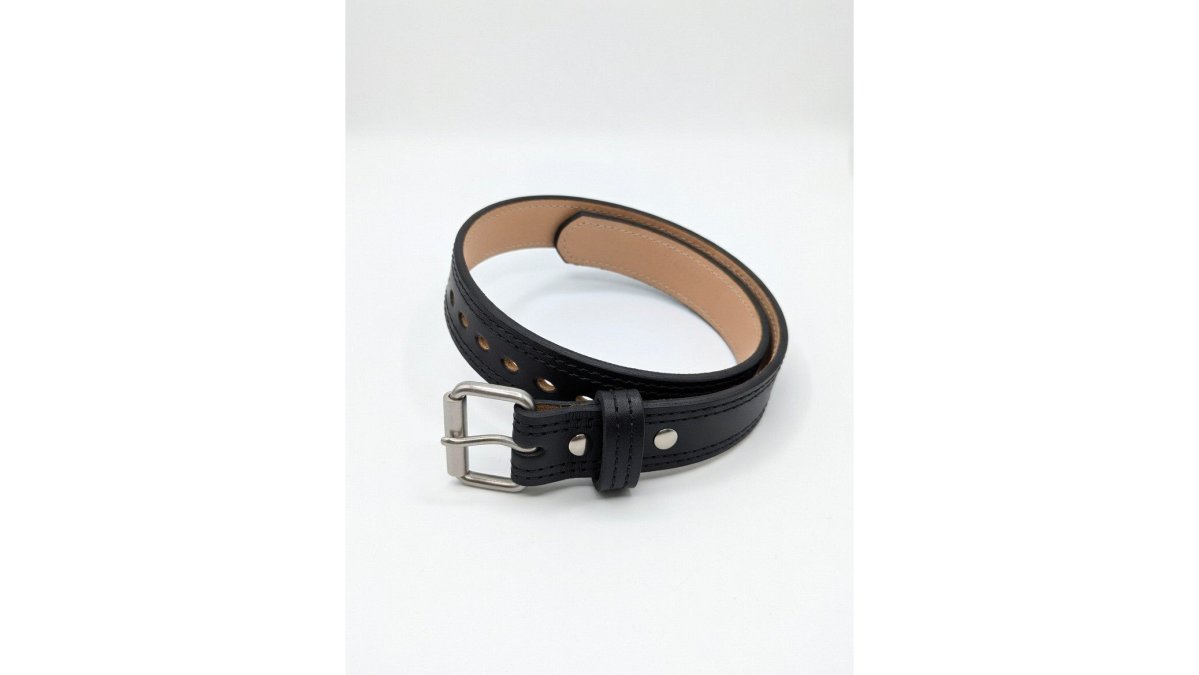
The best concealed carry gun belt for most people is a full-grain leather belt around 1.5 inches wide with a reinforced core, balancing support, concealment, and comfort. Armour Belts handcrafts every option below in Michigan, and most orders ship within one week.
Belt Width, Holster Compatibility, and Everyday Carry Performance
Match belt width to your holster loops first. A 1.5-inch belt is the default for most carry setups because it threads through standard holster clips and pant loops, while a 1.75-inch belt suits duty holsters with wider channels.
The Physics of Why Stiffness Beats Width Alone
Most buyers assume a wider belt automatically carries better. Width helps, but stiffness controls sag. Think of the belt as a beam spanning your hip bones. A holstered pistol creates a downward load at one point. A flexible beam bends there and lets the holster rotate outward and downward; a stiff beam resists that rotation and transfers the load to your hips.
Holster Clip and Loop Compatibility by Width
Different attachment systems have different width tolerances. Check yours before ordering:
- Plastic and metal clips (FOMI, C-Clip, J-Clip): Most are molded for 1.5-inch belts. A 1.25-inch belt can slide inside a 1.5-inch clip, causing the holster to shift during the draw.
- Pull-the-dot snap loops: These are cut to a specific width. Order the exact width the loop was made for; there is little forgiveness either way.
- Soft loops and struts: More tolerant, but a belt narrower than the loop still allows vertical play.
- Duty and competition holsters: Often built around 1.75-inch or 2-inch belts. A 1.5-inch belt will not fill the channel and the holster will rock.
Everyday Carry Performance: What Actually Matters
For everyday carry, the goal is a belt that disappears into your routine. You should be able to sit, drive, and bend without thinking about your waistband. That comes down to stiffness and fit working together, not width alone.
The practical checklist for EDC performance:
- The belt holds the holster at the same angle from morning to night
- You do not need to re-adjust after getting out of a car
- The belt does not roll or fold at the holster attachment point
- Concealment holds when you bend, reach, or sit
Maintenance and Leather Care for a Handcrafted Gun Belt
Full-grain leather lasts for years when you keep it clean and conditioned. Wipe the belt with a dry cloth after heavy use, then apply conditioner two or three times a year to keep the hide from drying out and cracking.
Care routine that works:
- Wipe off dust and grit weekly with a dry cloth
- Condition lightly every three to four months
- Let the belt air dry if it gets wet, never near direct heat
- Store it hanging or loosely coiled, not folded tight
How Body Type Affects Fit, Weight Distribution, and Comfort
Where you carry changes how a belt should fit, and body type is the biggest variable most buyers ignore. A belt that works for a lean frame can dig into the waist of someone with a larger midsection, especially when seated.
Load Distribution by Build
The fix for most comfort problems is load distribution. A wider, stiffer belt spreads the firearm's weight across more of your waist, reducing pressure points. If you have a larger build or carry a heavy pistol, the 1.75-inch Gun Belt Max or a 1.5-inch belt with a reinforced core handles that weight better than a thin belt.
Carry Position Changes Everything
- Appendix (AIWB): The holster sits forward of the hip, where the belt bends sharply when you sit. A slightly narrower belt at 1.25 inches conceals better under a tucked shirt and flexes less awkwardly at the crease. A very stiff 1.75-inch belt can feel like a bar across the front of the pelvis.
- Strong-side hip (IWB or OWB): The holster rides on the side of the hip, where a wider belt has more surface area to spread load. A 1.5-inch belt is the sweet spot; 1.75 inches helps with full-size pistols and weapon lights.
- Small of back: Less common today, but a wider, stiffer belt is important here because the holster sits over the spine and any sag pulls the belt away from the body.
- Cross-draw and chest carry: Belt width matters less; the belt mainly needs to stay put. A 1.5-inch belt with a reinforced core is usually enough.
Seated Comfort and Waist Expansion
Seated comfort matters as much as standing fit. When you sit, your waist expands and the belt presses harder against your body. Custom sizing solves this, because the belt is built to your measured waist rather than a generic range.
Matching Belt to Body Type and Carry Style
| Build | Recommended Width | Recommended Carry Position |
|---|---|---|
| Lean / narrow waist | 1.25 in or 1.5 in | AIWB or strong-side |
| Average | 1.5 in | Strong-side or AIWB |
| Larger midsection | 1.5 in or 1.75 in | Strong-side or OWB |
| Tall / long torso | 1.5 in | Strong-side |
| Short / compact torso | 1.25 in or 1.5 in | AIWB |
Match the belt to how you carry, not to what looks best on a shelf. A belt that is too wide for your carry position will be uncomfortable; a belt that is too narrow will not support the holster.
Conclusion: Choosing Your American Made Leather Tactical Belt
The belt you choose decides whether your carry setup feels solid or fights you all day. Full-grain steerhide, a reinforced core, and a fit built to your measured waist separate a belt that lasts from one that folds in a season.
Frequently Asked Questions
Are there any tactical belts made in the USA?
Yes. Several American workshops cut and stitch gun belts by hand, including Armour Belts in Michigan. Look for full-grain leather, reinforced cores, and a stated warranty before you buy. A belt described as handcrafted and backed by a lifetime warranty is a stronger signal of domestic production than a vague 'made in USA' label with no workshop details.
How does a leather gun belt differ from a standard dress belt?
A dress belt is built to look good and hold up trousers. A leather tactical belt is built to carry weight. Armour Belts gun belts measure roughly 5/16 inch thick, use full-grain leather, and hold a holster without rolling or sagging. Dress belts run thinner, flex easily, and typically fail within months of daily concealed carry use.
What is the best belt width for concealed carry holsters?
Most inside-the-waistband and appendix holsters are cut for a 1.5-inch belt, which is the common default for concealed carry. A 1.25-inch width fits narrower belt loops and dressier pants. The 1.75-inch Gun Belt Max suits outside-the-waistband and duty setups where maximum stability matters more than concealment.
Do leather tactical belts require special maintenance?
They need less than you might expect. Wipe the leather with a dry cloth, keep it away from prolonged moisture, and apply a leather conditioner once or twice a year. Avoid soaking the belt or drying it with heat, which pulls oils out of the hide. Stored and cared for this way, a full-grain leather gun belt holds its stiffness for years.
How do I know a belt uses real full-grain leather?
Ask what the belt is made from and how thick it is. Full-grain leather keeps the top layer of the hide, so it stays strong and develops a patina. Bonded or split leather is shaved and glued, then sold as 'premium leather.' Armour Belts states full-grain construction and a 5/16 inch thickness, which you can verify by hand when the belt arrives.
Share:
Durable Leather Belts for Men: 2026 Buyer's Guide
How to Measure Waist for a Gun Belt: 2026 Guide