Table of Contents
- Quick Comparison: 5 Best Concealed Carry Belts
- How to Measure Belt Size Accurately for Concealed Carry
- 1. Armour Belts Gun Belt: Best Overall for IWB and Appendix Carry
- 2. Armour Ozarks Tactical Nylon Belt: Best for Range and Competition
- 3. Armour Belts Gun Belt Max: Best for Heavy Loads and Full-Size Pistols
- 4. Armour Belts Casual Gun Belt: Best for Low-Profile Everyday Wear
- 5. Armour Belts Exotic Inlay Belts: Best for Style and Customization
- Leather vs Nylon Gun Belts: Which Material Is Right for You?
- Frequently Asked Questions
Last Updated: September 16, 2026
Quick Comparison: 5 Best Concealed Carry Belts
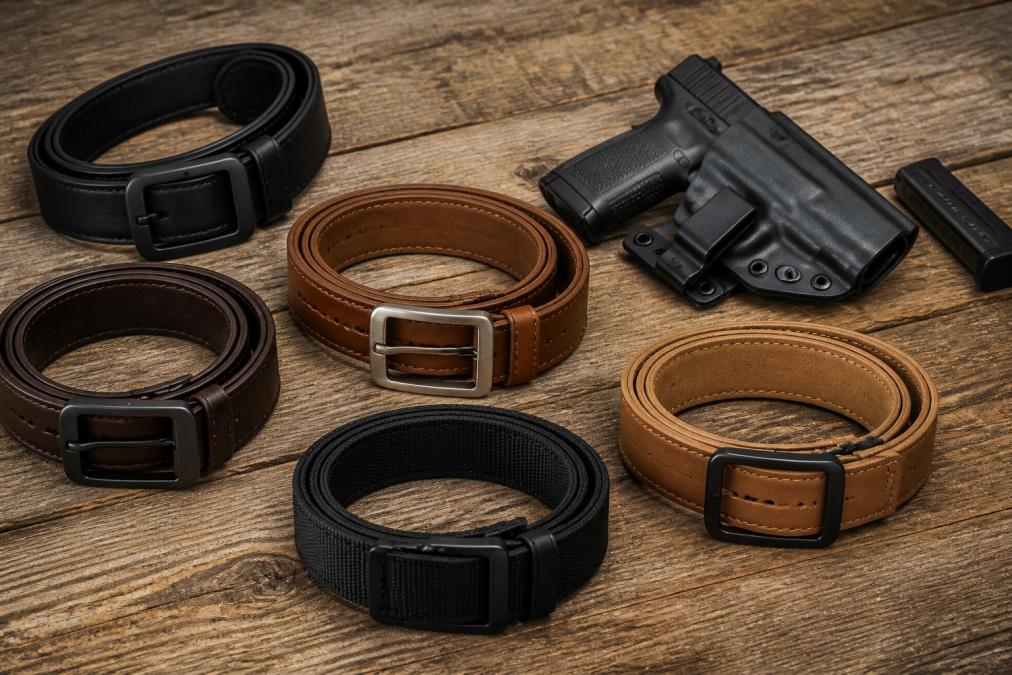
A “best concealed carry belt” list only helps if it tells you which belt for which job. This page is our lineup — not a review of every brand on the market.
Armour Belts are handcrafted in Michigan. The leather gun belts run about 5/16" thick. Most people daily-carrying IWB or appendix want the standard 1.5" Gun Belt. Use 1.25" if your belt loops are tight. Nylon is the lighter, faster-drying option.
Measure before you order. Do not send pant size. If you carry inside the waistband, measure with the holster on.
Belt |
Price |
Width |
Thickness |
Best For |
|---|---|---|---|---|
$125 |
1.25" or 1.5" |
~5/16" |
IWB and appendix carry |
|
$120 |
1.5" |
Heavy-duty webbing |
Range and competition |
|
$130 |
1.75" |
~5/16" |
Heavy loads, full-size pistols |
|
Casual Gun Belt |
$119 |
1.25" or 1.5" |
Just under 1/4" |
Low-profile everyday wear |
Exotic Inlay Belts |
$150 |
1.25" or 1.5" |
~5/16" |
Style and customization |
How to Measure Belt Size Accurately for Concealed Carry
Belt sizing for concealed carry is two measurements, not one: overall length and width. Get the length wrong and the buckle lands off-center; get the width wrong and your holster clips will not seat. Measure length by running a tape measure through the belt loops of the pants you actually carry in, over the holster and firearm, and note the number in inches. Order that number, not your pants size. An inside-the-waistband rig adds roughly an inch of circumference, so a belt cut to your bare waist measurement will sit short once the holster is in place.

Width is the measurement most buyers skip, and it is the one that decides whether the belt works with your gear. The three common widths behave differently:
- 1.25 inch, the standard for dress belts and most tuckable IWB clips. It disappears under a tucked shirt but offers the least surface area for spreading a heavy pistol's weight.
- 1.5 inch, the widest compatibility. It fits the majority of IWB and OWB holster loops, pancake holsters, and belt-clip designs, which is why it is the default recommendation for a first carry belt.
- 1.75 inch, built for full-size pistols, weapon lights, and spare-mag pouches. It spreads load across a wider band, but many holster slots and most dress-belt loops will not accept it.
Before ordering, measure the inside dimension of your holster's belt slot or clip. A clip rated for a 1.5-inch belt will not close over a 1.75-inch strap, and a 1.25-inch belt can slide or rotate inside a 1.75-inch slot. Match the belt to the holster first, then to the pants.
Two more details trip people up. First, decide where the buckle should land. Appendix carriers often run a belt slightly long so the holster can shift without the tail flapping. Second, measure on more than one day. Waistlines shift with clothing layers, and a belt sized for a summer tuck can run short over a winter base layer.
1. Armour Belts Gun Belt: Best Overall for IWB and Appendix Carry
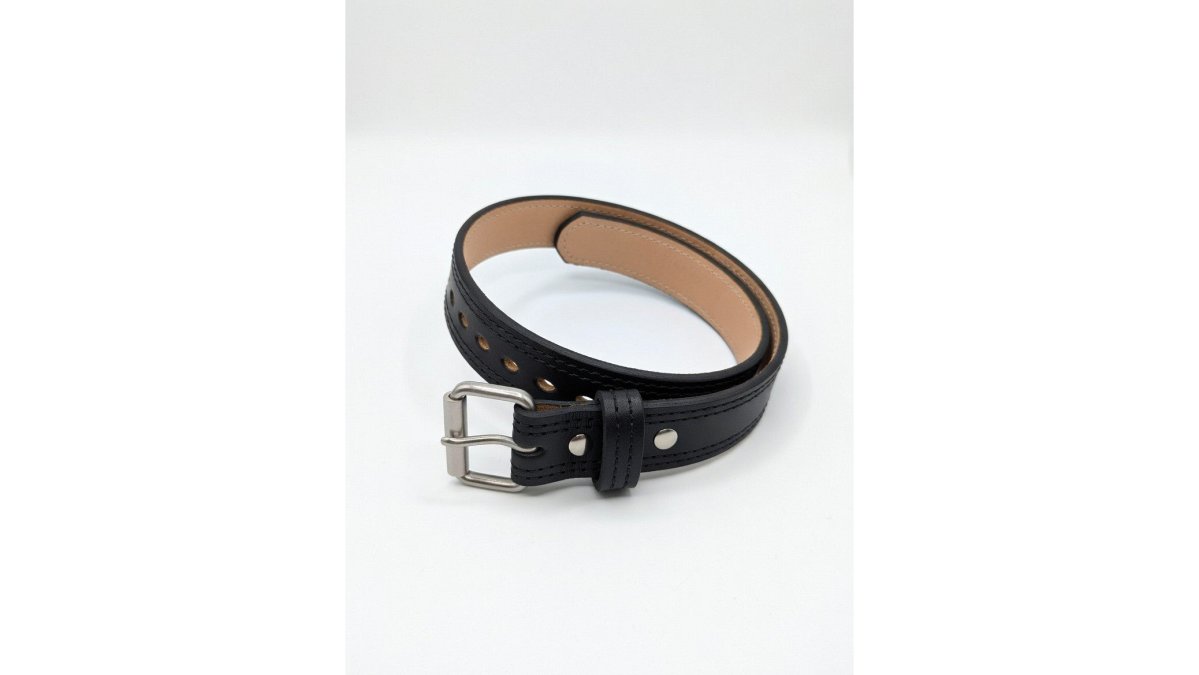
The Gun Belt is the best overall pick because it pairs full-grain leather with the rigidity appendix and inside-the-waistband carry demand, and it holds a holster without sag. It measures approximately 5/16 inch thick and comes in 1.25-inch or 1.5-inch widths. The 1.5-inch version carries two rows of stitching; the 1.25-inch version uses one row for a lower-profile look.

What sets it apart is the fit process. Each belt is handcrafted to your exact specifications, with Chicago screws holding the buckle so you can swap it or use your own. You pick from a range of leather colors and military-grade nylon thread colors. It carries a lifetime warranty.
Pros: Full-grain leather, rigid enough for appendix carry, swappable buckles, lifetime warranty. Cons: Not the cheapest option here, and the 1.25-inch version offers less surface area for heavy OWB rigs.
2. Armour Ozarks Tactical Nylon Belt: Best for Range and Competition
Nylon wins at the range because it shrugs off sweat, dirt, and repeated draws that would wear leather. The Armour Ozarks Tactical Nylon Belt is 1.5 inches of heavy-duty webbing with a one-inch strap of military-grade nylon that the removable cobra buckle couples to. It comes in black, foliage green, and tan.

This belt was a collaboration between Armour Belts and Ozarks Holster Co., designed so the belt and holster work as one system. The cobra buckle releases fast, which matters during drills, and the webbing resists the flex that causes holsters to shift mid-string.
Pros: Quick-release cobra buckle, tough webbing, three color options. Cons: Nylon reads as tactical, so it is a harder match for business casual dress.
3. Armour Belts Gun Belt Max: Best for Heavy Loads and Full-Size Pistols
Full-size pistols with a weapon light and a spare mag pouch need more belt than a 1.25-inch strap can give. The Gun Belt Max answers that with a 1.75-inch width and the same 5/16-inch thickness, spreading weight across a wider band so the belt resists rolling under load.
Two rows of stitching run the length of the belt.
4. Armour Belts Casual Gun Belt: Best for Low-Profile Everyday Wear
Thin does not have to mean flimsy. The Casual Gun Belt measures just under 1/4 inch thick, which keeps it comfortable under a tucked shirt while still supporting a holster. It is designed to work with most Kydex holsters and C-Clips, where belt thickness is often the limiting factor.
5. Armour Belts Exotic Inlay Belts: Best for Style and Customization
Customization is where these belts separate themselves. The exotic inlay line includes sharkskin, stingray, and elephant inlay options, plus an embossed horse and floral pattern, each built on the same 5/16-inch full-grain leather platform in 1.25-inch or 1.5-inch widths.
Leather vs Nylon Gun Belts: Which Material Is Right for You?
Matching material to your day.
- Choose leather if you carry daily in anything from jeans to slacks, want a belt that looks like an ordinary dress belt, and are willing to condition it a few times a year.
- Choose nylon if you train often, sweat heavily, or want a quick-release buckle, and you accept a more tactical look and periodic inspection of the webbing and buckle.
If you are unsure, start with a 1.5-inch leather belt. It fits the widest range of holsters and clothing, and holds a consistent draw angle.
Frequently Asked Questions
What is the difference between a standard belt and a concealed carry belt?
A standard belt is designed for fashion and light duty, often made from thin leather or synthetic materials that flex under weight. A concealed carry belt is built with a reinforced core, thicker leather or nylon webbing, and a stiff construction that prevents sagging when a holstered firearm is attached. This rigidity keeps the firearm stable against your body, improves concealment, and distributes weight across your waistline for all-day comfort. Without that stiffness, a holster can shift, dig in, or print through clothing.
How do I choose the right size for a concealed carry belt?
Measure your current belt from the fold at the buckle to the hole you use most, then order that exact length. Do not rely on your pants size, as belt sizing varies by manufacturer. For IWB carry, add 2 inches to your waist measurement to account for the holster's thickness inside the waistband. Armour Belts handcrafts each belt to your specified length, and most orders ship within one week, so getting the measurement right the first time saves you a return.
Do I need a reinforced belt for concealed carry?
Yes, if you carry a firearm regularly. A reinforced core, whether from thick full-grain leather or a Kydex stiffener insert, prevents the belt from rolling or collapsing under the holster's weight. This is especially important for inside the waistband and appendix carry, where a flimsy belt lets the gun tilt outward and print. A stiff belt also keeps the holster's retention consistent, so your draw stroke stays reliable. Even a lightweight pistol benefits from a belt that holds its shape.
Are concealed carry belts worth the investment for EDC?
A quality concealed carry belt typically costs between $119 and $150, which is more than a department store belt. But that investment buys a belt that will not sag, stretch, or lose its shape after a few months. A rigid, well-made belt improves comfort, concealment, and draw consistency every time you put it on. Many Armour Belts customers report wearing the same belt daily for nearly a decade, which works out to pennies per day for reliable performance.
How often should I replace my concealed carry belt?
Replace your belt when you notice sagging, cracking, delamination, or a loss of stiffness that lets the holster shift. A full-grain leather belt from Armour Belts carries a lifetime warranty and is built to last for years with basic care like wiping it down and conditioning it occasionally. Nylon tactical belts may wear faster at the buckle attachment point or where the webbing creases. If your belt no longer holds your firearm securely, it is time for a replacement.
Share:
Heavy Duty Leather Gun Belt Guide: Top Picks & Tips
Durable Leather Belts for Men: 2026 Buyer's Guide