
Table of Contents
- Step 1: Choose a Heavy Duty Leather Gun Belt as Your Foundation
- Step 2: Adjust Holster Positioning and Cant to Reduce Shifting
- Step 3: Tune Retention and Tension to Lock the Holster in Place
- Step 4: Preventing Holster Sag with Belt Loops and Stabilizers
- Step 5: Upgrade Holster Clip Upgrades for a Secure Grip
- Step 6: Maintain Hardware and Tighten Adjustment Screws
- Step 7: Troubleshoot Persistent Holster Shifting
- Frequently Asked Questions
Last Updated: September 30, 2026
Step 1: Choose a Heavy Duty Leather Gun Belt as Your Foundation
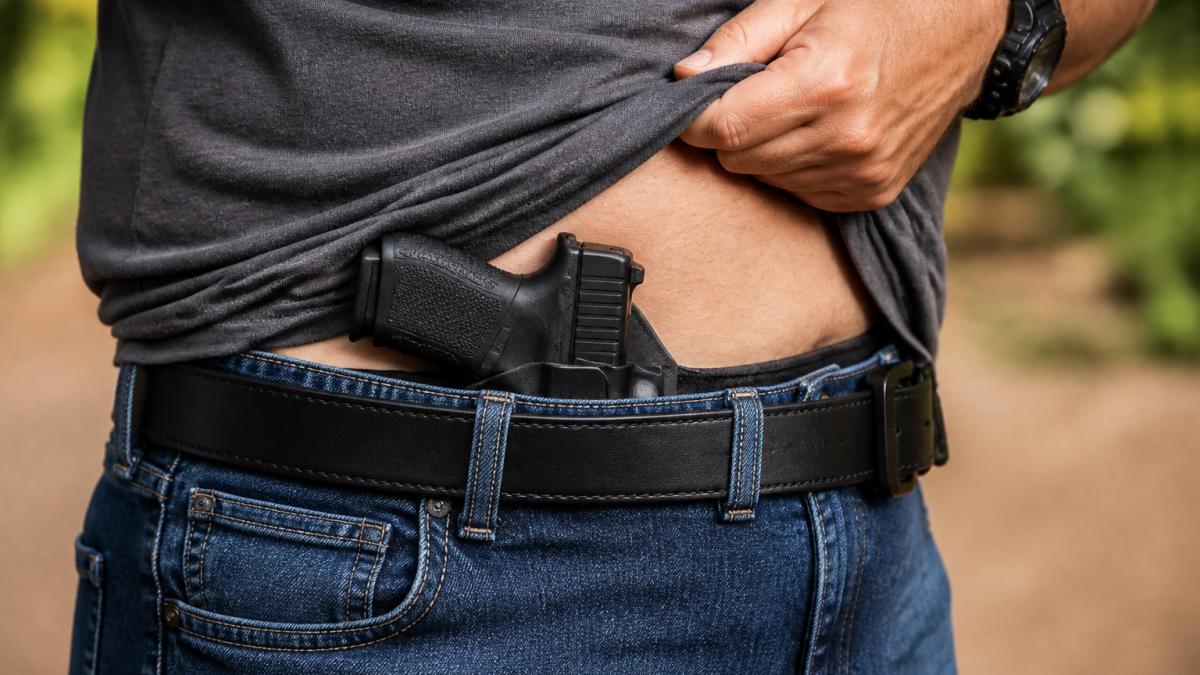
A holster that shifts almost always starts with a belt that gives. A heavy duty leather gun belt is the foundation of a stable carry setup. Without it, every other fix you try is a patch on a broken system.

Here's the core problem. A regular dress belt folds and rolls under the weight of a holstered pistol. It flexes when you sit, stand, or walk. Your holster follows that flex, and that is what "holster shifting" looks like in practice.
A proper gun belt fixes this at the source. Look for these traits:
- Full-grain leather that stays flat under load
- About 5/16" thick for real rigidity
- 1.5" width for most full-size and compact pistols
- 1.25" width if your belt loops are tight
- Military-grade nylon thread for stitching that holds
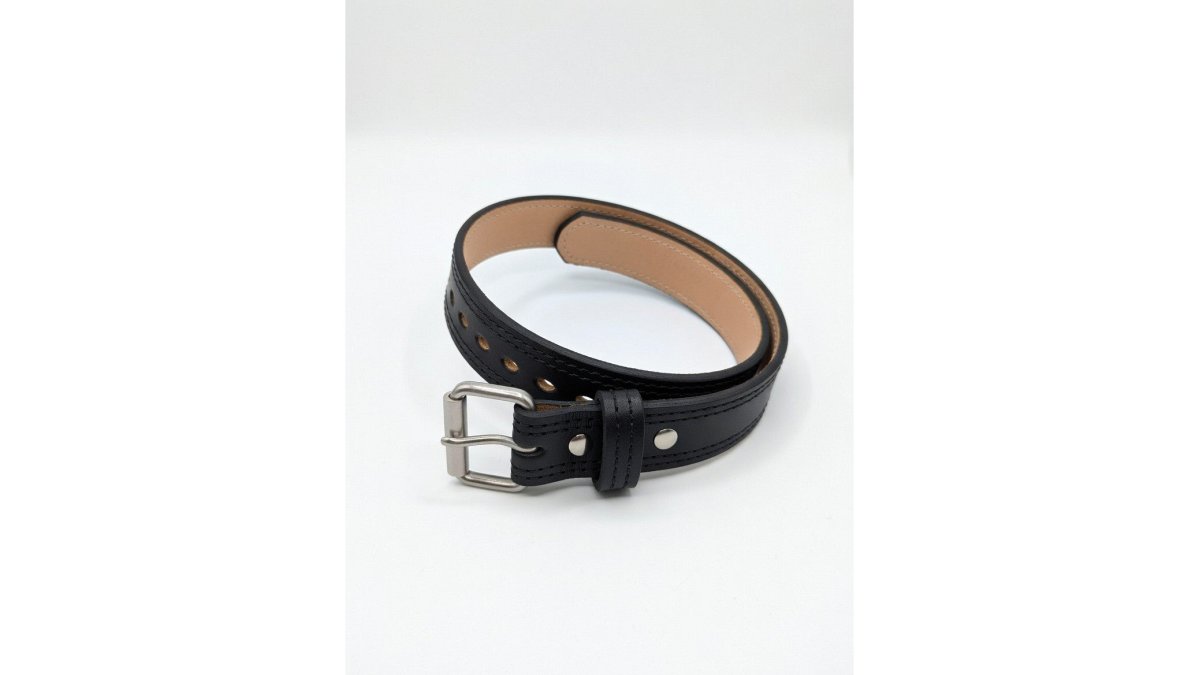
At Armour Belts, each belt is handcrafted in Michigan from full-grain leather and cut to your exact measurement. That custom fit matters more than most people realize. A gun belt that is 1" off is a bad belt, and a bad belt is a shifting belt.
Belt Width, Thickness, and Rigidity Explained
Belt rigidity is the belt's resistance to flexing under the weight of your gear. Thickness and material drive it. A 5/16" full-grain leather belt holds its shape far better than a thin fashion belt.
Width changes how the belt sits in your loops. The 1.5" option is the workhorse for most carry setups. Choose 1.25" when your pants have narrow loops, since both widths share the same thickness.
Step 2: Adjust Holster Positioning and Cant to Reduce Shifting
Holster placement and cant do more for stability than most people expect. Small angle changes can stop a holster from walking along your belt line.
Start with the basics. The 3 o'clock position works for many shooters, while appendix carry sits forward of the hip. Test both and watch how the holster behaves when you move.
Then set your cant, which is the forward or backward tilt of the holster.
Finding the Right Ride Height and Body Placement
Ride height is how high the holster sits above your waistband. A higher ride can feel comfortable but lets the holster rock. A lower ride keeps more of the holster below the belt line, which adds stability.
Step 3: Tune Retention and Tension to Lock the Holster in Place
Retention and tension are not the same thing, and mixing them up causes problems. Retention is the holster's grip on the pistol. Tension is how tight the adjustment screws hold that grip.
- Too loose: the pistol rattles and the holster feels unstable
- Too tight: the draw stroke drags and slows you down
- Just right: firm retention with a smooth, repeatable draw
Step 4: Preventing Holster Sag with Belt Loops and Stabilizers
Preventing holster sag comes down to how your belt, holster, and body interact. Belt loops are the first anchor point. When they are spaced close together, they limit how far the holster can travel along the belt line. When they are spaced wide, the holster has room to walk. This is why the same holster and belt can feel rock-solid on one pair of pants and loose on another.
Stabilizer Options by Holster Material
Stabilizers are not one-size-fits-all. The material of your holster changes which fix actually holds.
- Kydex and polymer holsters: Rigid shells respond well to clip-mounted stabilizers and wedges. A foam or rubber wedge pressed against the body adds leverage that stops the grip from tipping outward. Velcro on the clip works, but the smooth Kydex surface needs a clean, degreased area for the adhesive to bond.
- Leather holsters: Leather flexes and stretches, so a stabilizer that relies on a rigid shell will not hold. Leather responds better to a wider belt loop spacing and a thicker belt. Conditioning the leather keeps it from softening at the mouth, which is where sag usually starts.
- Hybrid holsters: These combine a rigid shell with a flexible backing. The backing is the weak point. A wedge or a set of rubber washers between the shell and the backing can stiffen the platform without replacing the whole holster.
Body Type and Holster Sag
Most guides treat holster sag as a gear problem. Body shape matters just as much. A person with a higher hip-to-waist ratio often finds that a holster at 3 o'clock tips outward, because there is less flat surface for the holster to sit against. A person with a longer torso may find the holster rides high and rocks front to back.
| Problem | Likely Cause | Fix |
|---|---|---|
| Holster slides along belt | Loose belt, smooth clip | Add velcro tape or friction pad |
| Holster rocks front to back | Ride height too high | Lower ride height, adjust cant |
| Belt sags on one side | Weak belt, poor loop spacing | Switch to a rigid gun belt |
| Holster pulls away from body | Weak retention, wrong position | Tune tension, move to 3 o'clock |
| Holster tips outward at the grip | Body shape, no wedge | Add a wedge, lower ride height |
| Leather holster mouth softens | Lack of conditioning | Condition leather, use a thicker belt |
Step 5: Upgrade Holster Clip Upgrades for a Secure Grip
Holster clip upgrades are one of the fastest ways to stop shifting. A worn or flimsy clip lets the holster move no matter how good your belt is.
Step 6: Maintain Hardware and Tighten Adjustment Screws
Mounting hardware loosens over time. Screws back out, clips wear, and leather stretches. A quick monthly check keeps your gear tight and your holster secure.
Run through this list every month:
- Tighten all adjustment screws on the holster
- Check clip tension and replace if weak
- Inspect belt for stretching or cracking
- Confirm retention still feels firm
- Re-test your draw stroke for consistency
Step 7: Troubleshoot Persistent Holster Shifting
If your holster still shifts after working through the belt, position, retention, and stabilizer steps, the issue is usually in the foundation. Go back to the belt first, then work forward through the setup. A rigid belt is the one component that fixes shifting at the source, because every other fix depends on the belt holding its shape.
Ask these questions in order:
- Does your belt flex when you holster the pistol?
- Is your clip matched to your belt width?
- Is your cant set for your body type?
- Are your screws tight and your retention firm?
- Does the holster tip outward at the grip when you move?
DIY Fixes vs. Aftermarket Stabilizers
Once the belt is solid, the remaining shifting usually comes down to the holster platform. This is where most guides stop, and where the real trade-off lives.
When to Change the Setup, Not the Part
Sometimes the fix is not a part at all. If you have tried a rigid belt, a matched clip, a tuned cant, and a stabilizer, and the holster still shifts, the problem may be the holster body itself. A holster built for a different pistol, or one with a worn shell, will never lock in the way a properly fitted holster does.
Frequently Asked Questions
Why does my IWB holster keep moving around?
Your IWB holster likely shifts because your belt lacks rigidity or the holster clips aren't tight enough. A flimsy belt allows the holster to sag and rotate, especially with heavier pistols. Switching to a stiff gun belt and adjusting clip tension can stop the movement. Also check that your belt width matches your holster clips; a 1.5-inch belt with 1.25-inch clips will slide. Proper placement and cant also play a role in keeping the holster stable during daily carry.
How do I keep my holster from sliding on my belt?
Prevent sliding by using a belt with high friction, like full-grain leather, and ensuring your holster clips are tightened. If your clips are worn, upgrade to metal clips with adjustable tension. Positioning the holster so the clip sits between belt loops can also reduce lateral movement. For IWB carry, a belt that is 5/16-inch thick provides a secure platform. Regularly check that screws on the clips are snug, as they can loosen with use.
Does a stiffer belt stop holster shifting?
Yes, a stiffer belt is one of the most effective ways to stop holster shifting. A heavy duty leather gun belt, like those from Armour Belts, resists rolling and sagging under the weight of a holster. With a thickness of about 5/16 inch, it keeps the holster vertical and prevents the belt from twisting. The rigidity also distributes weight evenly, reducing pressure points and keeping your gear in place throughout the day.
How should a gun belt fit to prevent holster sag?
A gun belt should fit snugly around your waist, with enough tension to hold the holster without being uncomfortable. Measure with your holster in place if you carry IWB, as Armour Belts recommends. The belt should not require constant readjustment. If you can fit more than two fingers between the belt and your body, it's too loose. A proper fit, combined with a stiff belt, prevents sag and keeps your holster secure.
Share:
How to Choose a Concealed Carry Belt: The 2026 Guide
Why Cheap Leather Belts Fail: A 2026 Guide