

Table of Contents
- What Separates a Gun Belt From a Dress Belt
- Quick Comparison: Best Leather Belts for Holster Support
- 1. Armour Belts Gun Belt: Best Overall for IWB and Appendix Carry
- 2. Armour Belts Gun Belt Max: Best for Open Carry and Heavy Loads
- 3. Armour Belts Casual Gun Belt: Best for Everyday Comfort
- 4. Armour Belts Exotic Inlay Belts: Best for Refined Style
- How to Measure Belt Size Accurately for Holster Support
- Concealed Carry Belt Thickness Requirements Explained
- Maintaining Leather Gun Belts
- Frequently Asked Questions
Last Updated: September 15, 2026
What Separates a Gun Belt From a Dress Belt
A gun belt is a load-bearing platform engineered to hold a holstered firearm without sagging, twisting, or shifting; a dress belt just holds up trousers. The difference is core reinforcement, leather grade, and thickness.
At Armour Belts, we build every belt around that distinction. Before buying the best leather belts for holster support, understand why a department-store belt fails the moment you clip a holster to it: it flexes and rolls, while a proper carry belt stays vertical under load.

The NIJ standard for holster retention testing frames the retention conversation around the holster, but the belt is what lets that retention work. A flimsy belt lets the holster move, and a moving holster defeats retention entirely.
Reinforced Core and Stiffness
Stiffness prevents sagging. Quality gun belts sandwich an internal stiffener, scuba webbing, spring steel, or Kydex, between layers of leather, resisting the vertical flex that pulls the belt away from your body.
Without a reinforced core, weight collapses to the clip point: the belt rolls, the holster tilts, and concealment suffers. Rigidity is the entire function.
Full-Grain vs. Top-Grain Leather
Full-grain leather is the top layer of the hide with the grain intact, the strongest, most durable cut available. Top-grain leather has that outer layer sanded away, removing the toughest fibers and leaving a thinner, weaker material.
Many belts labeled "premium leather" are top-grain, bonded, or genuine leather, all of which stretch under load. Full-grain leather resists stretching, holds its shape, and develops a patina over years of daily wear. The Leather Research Laboratory at the University of Cincinnati has documented how grain structure affects tensile strength in finished leather goods.
Quick Comparison: Best Leather Belts for Holster Support
The table below breaks down the Armour Belts lineup by thickness, width, price, and best use.
| Model | Thickness | Widths | Price | Best For |
|---|---|---|---|---|
| Gun Belt | 5/16 in | 1.25 in, 1.5 in | $125 | IWB and appendix carry |
| Gun Belt Max | 5/16 in | 1.75 in | $130 | Open carry, heavy loads |
| Casual Gun Belt | Under 1/4 in | 1.25 in, 1.5 in | $119 | Everyday comfort |
| Exotic Inlay Belts | 5/16 in | 1.25 in, 1.5 in | $150 | Refined style |
A common mistake is buying on price alone and ignoring thickness. A belt under a quarter-inch thick will struggle with a full-size pistol and spare magazine, however good the leather.

1. Armour Belts Gun Belt: Best Overall for IWB and Appendix Carry
The Gun Belt is the best overall choice for inside-the-waistband and appendix carry, pairing a full-grain leather body with a reinforced core that stops sag at the source. At roughly 5/16 inch thick in 1.25-inch or 1.5-inch widths, it holds a holster tight against the body all day.
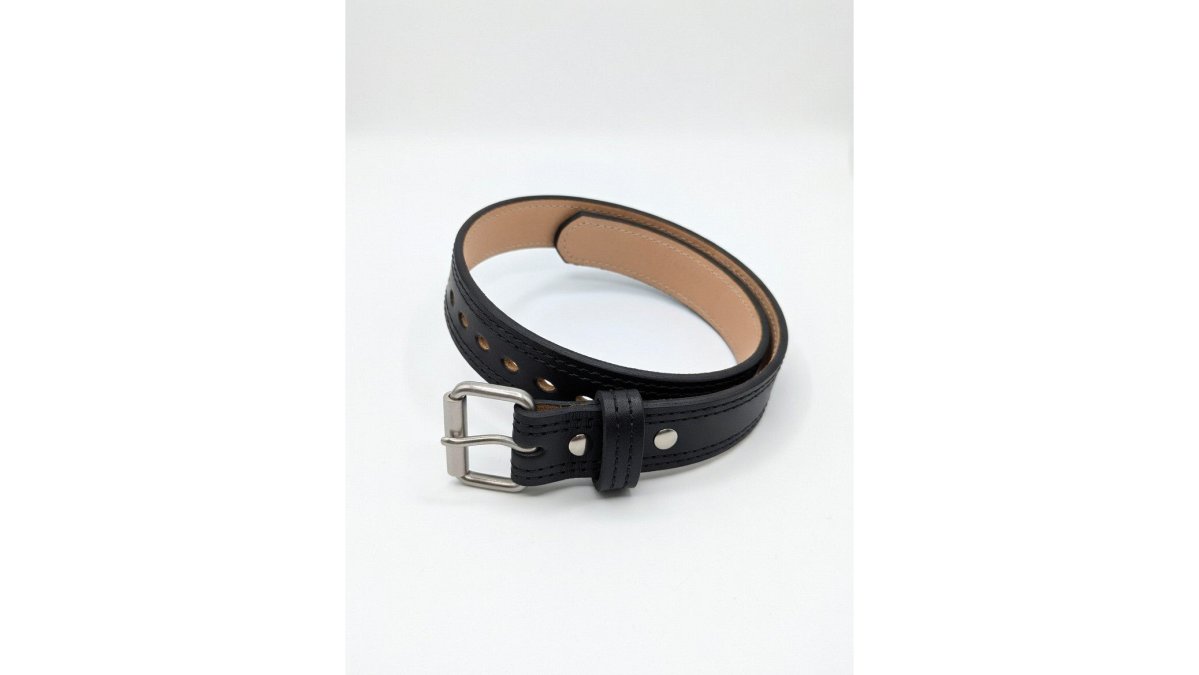
The 1.5-inch version carries two rows of stitching; the 1.25-inch uses a single row for a lower profile. Chicago screws hold the buckle for tool-free swaps, and every belt is handcrafted in Michigan.
Specs and Pricing
- Thickness: approximately 5/16 inch
- Widths: 1.25 inch or 1.5 inch
- Price: $125
- Core: reinforced for IWB and appendix carry
- Warranty: lifetime
Pros and Cons
What works: the reinforced core eliminates the sag that plagues thin belts, and the lifetime warranty backs the build.
What doesn't: the 5/16-inch thickness needs a short break-in period. For something thinner out of the box, look at the Casual Gun Belt.

2. Armour Belts Gun Belt Max: Best for Open Carry and Heavy Loads
The Gun Belt Max is the pick for open carry and heavy loads because its 1.75-inch width spreads weight across a wider surface. It shares the standard Gun Belt's 5/16-inch thickness but adds two rows of stitching for extra tensile strength.
If you carry a full-size pistol with a weapon light and spare mag pouch, this belt keeps everything vertical, resisting the rotational torque heavier setups create where standard-width belts fail. It runs $130.
3. Armour Belts Casual Gun Belt: Best for Everyday Comfort
The Casual Gun Belt is the best choice for everyday comfort: just under a quarter-inch thick, the thinnest option in the lineup, yet it still holds a holster securely for the carrier who wants a belt that disappears under a shirt.
At $119, it undercuts the standard Gun Belt and suits lighter carry setups.
Comfort and support are not opposites: a thinner belt with a properly matched holster can carry a compact pistol all day without the bulk of a 5/16-inch platform.
4. Armour Belts Exotic Inlay Belts: Best for Refined Style
The exotic inlay belts deliver full carry performance without giving up style. Sharkskin, stingray, and elephant inlay options all measure about 5/16 inch thick in 1.25-inch or 1.5-inch widths, so you get the same reinforced core as the standard Gun Belt.
Each runs $150 and is handcrafted to your specifications, with the same buckle options and Chicago screw mounting. The inlay sits flush with the leather body, so it does not interfere with holster clips.
How to Measure Belt Size Accurately for Holster Support
To measure belt size accurately, run a tape measure through the belt loops of the pants you actually carry in, then order to that measurement rather than your pants size. The two are rarely the same number, and guessing leads to a belt that will not hold a holster where you want it.
Follow these steps:
- Put on the pants and holster setup you carry daily.
- Thread a flexible tape measure through the belt loops, over the holster.
- Pull it snug, the way the belt will actually sit.
- Read the number at the point where the tape meets itself.
- Order that measurement, not your waist size from a clothing label.
If you carry inside the waistband, add the holster's thickness to the measurement, bulk a pants-size measurement ignores entirely.
Concealed Carry Belt Thickness Requirements Explained
There is no legal thickness requirement for a concealed carry belt, but there is a mechanical one: belt thickness must fall inside the tolerance window of whatever holster hardware you clip to it. Get it wrong and the belt either will not pass through the clip or passes through so loosely that the holster shifts on the draw.
Why Thickness Is a Fitment Spec, Not Just a Stiffness Spec
A holster clip is a spring-loaded clamp with a fixed opening and clamping force. Slide a belt in and the clip deflects outward, gripping with the force it was designed to apply at a specific thickness range. Too thin and retention drops; too thick and you either cannot seat the clip or permanently spread it, killing retention on every belt you use afterward.
Matching Belt Thickness to Common Holster Hardware
The Practical Thickness Floor
Width Matters Alongside Thickness
Maintaining Leather Gun Belts
How Full-Grain Leather Ages Under Daily Carry
The Patina Trade-Off
Environmental Durability: Humidity, Sweat, and Heat
A Care Routine That Preserves Rigidity
Frequently Asked Questions
What is the best belt for a gun holster?
A dedicated gun belt made from full-grain leather with a reinforced core provides the stiffness needed to support a holstered firearm without sagging. Look for belts around 5/16 inch thick with double-row stitching and a sturdy buckle. Armour Belts' Gun Belt at $125 is built for IWB and appendix carry with a lifetime warranty.
How thick should a leather gun belt be?
Most concealed carry belt thickness requirements call for at least 1/4 inch, with 5/16 inch being ideal for full-size pistols and heavy accessories. Thinner belts flex under weight and cause the holster to shift. Armour Belts' standard Gun Belt measures approximately 5/16 inch thick, while the Casual Gun Belt comes in just under 1/4 inch for lighter setups.
How do I measure belt size accurately for a gun belt?
Measure your current belt from the fold at the buckle to the hole you use most, or run a tape measure through your pants' belt loops. Order that measurement, not your pants size. Armour Belts handcrafts each belt to your exact spec and offers exchanges if the fit is off, so you are not stuck with the wrong size.
Do leather gun belts need special maintenance?
Yes. Full-grain leather develops a patina over time. Regular care can help maintain its appearance.
Why does a standard leather belt fail for concealed carry?
Standard dress belts are thin, lack a reinforced core, and stretch under the weight of a holstered pistol. Within weeks, they sag and the holster shifts, slowing your draw. A purpose-built leather belt for holster support distributes weight across the waistband and holds retention consistently, which is why carry belts use thicker leather and stiffer construction.
Choosing the right carry belt is the difference between a holster that stays put and one you constantly adjust. Armour Belts handcrafts every belt in Michigan from full-grain leather, with a reinforced core built for IWB and appendix carry, a lifetime warranty, and customization down to the thread color. Get started with Armour Belts and carry with a belt engineered to hold its shape for years, not months.
Share:
Best Heavy-Duty Leather Gun Belts for Concealed Carry (What Actually Stops Sag)
Heavy Duty Leather Gun Belt Guide: Top Picks & Tips